
Teak Wood Guide: Origins, Properties, Uses, and Sustainability

Teak wood is a tropical hardwood from the Tectona grandis tree, valued for its natural oils, stable grain, and long-term resistance to rot and insects. It’s widely used for outdoor furniture, boat decks, flooring, and kitchen items because it stays reliable in wet, high-wear conditions where other woods swell, crack, or decay.
Table of Contents
If you’ve ever handled real teak, you’ll notice a waxy, oily feel and a faint leathery scent when you sand it—those extractives are part of why it survives outdoors, but they also change how you glue and finish it.
What teak wood is
Tectona grandis basics
Tectona grandis is the primary species sold as teak. It’s a broadleaf hardwood native to South and Southeast Asia and grows into large, straight-bole trees in good conditions, which is why it’s historically been prized for long, clear boards used in joinery and ship work. Teak’s signature performance comes from silica and oily extractives in the wood—great for weathering, but a little rough on tools.
A common beginner mistake is buying “teak” that’s actually another species (often marketed as “African teak”). If you want true teak behavior—especially outdoors—verify the species name on invoices or certification paperwork, and watch for teak’s typical straight grain and oily surface that slightly resists water at first touch.
Heartwood vs sapwood
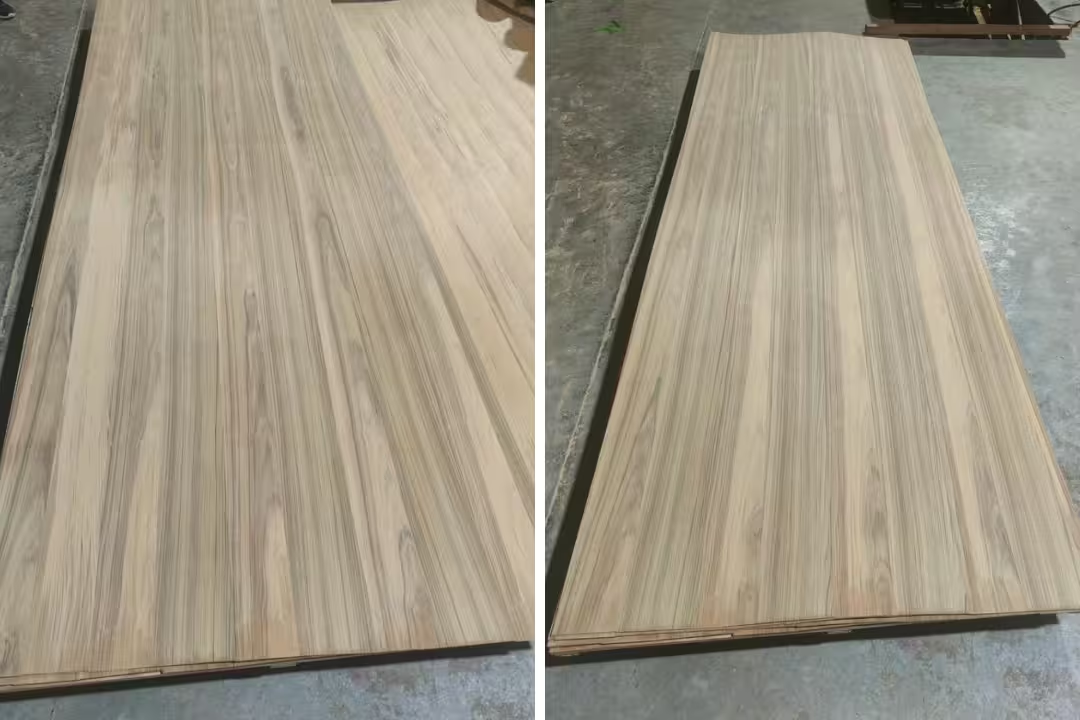
Real teak durability lives in the heartwood, the darker inner portion that develops higher concentrations of protective extractives. Sapwood is the lighter outer band; it machines fine but doesn’t match heartwood’s decay resistance, so it’s a weak link in outdoor builds if it isn’t sealed and detailed correctly.
In outdoor furniture and decking, I avoid boards with wide sapwood edges because that area can pick up moisture faster and discolor unevenly. If sapwood is unavoidable (common in faster-grown plantation boards), I’ll either rip it off or isolate it in low-exposure parts, then pre-seal end grain to slow water uptake.
Color and grain
Freshly milled teak shows a golden-brown tone that can carry subtle olive or honey notes, often with darker streaks. Grain is usually straight, sometimes wavy; pores are open enough to show texture, yet the surface can feel smooth because of oils. With sun exposure, outdoor teak typically shifts to a silver-gray unless you maintain a UV-protective finish.
Don’t mistake gray teak for “ruined” teak—graying is mostly surface oxidation. The risk is uneven color: drips from metal fasteners, plant pots, or tannin-rich leaves can create dark stains that feel slightly gritty when you rub them. A controlled clean (mild teak cleaner, thorough rinse, full dry) and a light sanding usually brings it back.
Origin and global teak production
Native range
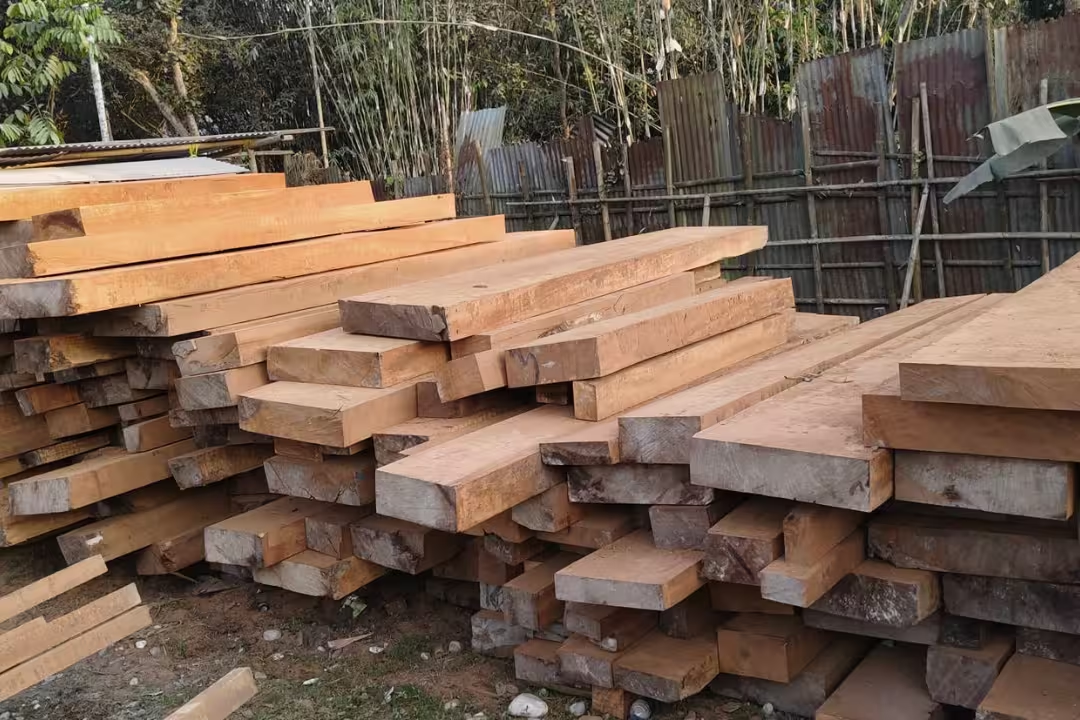
Teak is native to India, Myanmar, Laos, and Thailand. In its native forests, tree form and wood quality can be exceptional, but supply is limited and tied to strict controls and political risk in some regions, which is one reason plantation teak expanded so strongly.
For a quick origin reference, Exploring the origins of teak wood gives a helpful overview of where teak comes from and why it became a global material.
Plantation expansion
Plantations took off because teak is one of the few tropical hardwoods that can produce a usable, stable board on a planned schedule. The trade-off is that faster-grown plantation trees often have a higher proportion of juvenile wood, which can mean slightly lower density, more color variation, and more sapwood in the boards you see at retail.
A practical buying tip: if you’re building an outdoor top or bench seat, choose boards with consistent color and tighter growth character, then orient the boards so water can’t pond. Teak tolerates wetting, but standing water invites mildew films that feel slick under your palm and can stain seams.
Major producers
Modern teak supply comes mainly from Indonesia and India plantations, with Myanmar historically known for natural-forest teak. Indonesia is frequently referenced as a major supplier, and India holds a large share of plantation area; smaller but important producers span Africa and Latin America, including Costa Rica.
Producer mix matters because it affects board width, sapwood percentage, and grading consistency. In small woodworking builds, those differences show up as glue lines that “telegraph” under finish or as boards that weather at different rates on the same patio set.
Trade overview
Teak moves through global trade as logs, sawn timber, veneer, and finished goods. Most buyers feel the trade through finished products—decking, furniture, trim—where “teak” can mean anything from top-grade heartwood to mixed-grade boards with sapwood and short lengths.
One data-heavy overview worth citing is the FAO teak resources and production report, which discusses plantation expansion, production patterns, and yield variation across regions.
Teak wood properties and performance
Janka hardness
Teak lands around 1000–1155 lbf on the Janka hardness scale, which puts it in a sweet spot: hard enough to resist dents in normal use, yet not so hard it’s miserable to cut and plane compared with ultra-dense exotics. If you want context across species, this site’s wood hardness scale breakdown helps you gauge whether teak is “hard enough” for your project.
In real use, hardness isn’t the whole story—teak’s surface can still show dull scuffs in high-traffic areas if grit gets under shoes. On boats and patios, that grit acts like sandpaper; a quick rinse routine does more than another coat of oil.
Rot and insects
Teak heartwood has standout decay resistance and is widely known for holding up against insects, including termites, because its natural oils and extractives are inhospitable to many pests. That said, “resistant” doesn’t mean “immune”: wet debris trapped in corners, poor drainage, and bad design details can still cause surface mold, staining, and soft spots around sapwood.
The biggest beginner mistake is copying indoor joinery details outdoors—tight seams, flat caps, and unsealed end grain. Build with drainage gaps, slope horizontal surfaces slightly, and treat end grain like a sponge that needs extra sealing.
Density and strength
Teak is a medium-weight hardwood with a strong balance of stiffness and workability. That balance is why it behaves well in doors, boat trim, and furniture parts that must stay straight across seasons. If you like comparing materials by weight and movement behavior, this site’s density of wood guide helps you predict how “heavy” a teak build will feel.
A real constraint: dense tropical woods can feel stable but still move across grain with humidity swings. Wide teak panels need room to expand, or you’ll hear that sharp “tick” of a stressed fastener and later see hairline splits telegraphing from a screw hole.
Workability traits
Teak machines cleanly with sharp tooling, but its silica content can dull edges faster than you’d expect. When you run a plane over teak, you’ll often feel a slight “drag” compared with drier woods, and sanding dust can clump a bit if the wood is oil-rich.
Gluing is where people get burned. Teak’s oils can reduce bond strength if you glue straight off the saw. I wipe mating faces with acetone (quick wipe, let it flash off), then use a proven adhesive (epoxy or resorcinol for exterior; premium PVA for interior), clamp firmly, and avoid oily squeeze-out contaminating areas that need finish later. For a baseline spec reference, Wood Database: Teak summarizes key properties and working notes.
Teak growth and yield statistics
MAI explained
MAI (mean annual increment) is the average wood volume growth per hectare per year over a given period. It’s the number plantation managers watch because it helps decide thinning schedules and harvest rotation: MAI rises early, peaks, then can flatten as stands mature and competition increases.
The practical catch is that MAI can look great on paper while sawlog quality lags. A stand can add volume fast with wide growth rings yet still produce more sapwood and smaller heartwood cores, which changes how boards perform and how buyers grade them.
Rotation lengths
Teak rotation lengths often fall in the 40–90 year range depending on site, objectives, and market (posts and small timber vs large clear sawlogs). Short rotations push volume and cashflow; long rotations push heartwood development, log diameter, and premium grading.
New buyers sometimes assume “plantation” always means “low quality.” Reality is messier: good genetics, spacing, and thinning can produce excellent boards, while poorly managed stands can yield knotty, stressed timber that cups as soon as it’s milled.
Yield by region
Published yield figures vary widely by site and management. FAO reports global MAI ranges around 2.91–13.8 m³/ha/year, with examples like Costa Rica around 6.9 m³/ha at 40 years and West Africa often cited in the 8–11 m³/ha range, while long-rotation Indonesian systems can accumulate high total volume with thinning regimes.
| Region / system (examples) | Reported teak growth / yield signal |
|---|---|
| Global range (FAO) | MAI about 2.91–13.8 m³/ha/year (site + management dependent) |
| Costa Rica plantations (example) | ~6.9 m³/ha/year around 40-year rotation (example figure) |
| West Africa (examples) | Often cited around 8–11 m³/ha/year under favorable conditions |
| Long-rotation managed systems (example) | Higher total volume with planned thinnings, longer time to premium logs |
If you’re comparing “good teak” claims, ask for log diameter classes, heartwood percentage, and grading rules—not just MAI. A fast MAI can still translate into narrow boards and higher waste if knots or sapwood force you to cut around defects.
Stocking targets
Stocking targets are often discussed around 200–300 stems/ha at final crop, with thinning used to concentrate growth into fewer, better trunks. Thin too late and you lock in slender stems; thin too hard and you can get epicormic branching, which turns into knots that show up right where you want clear grain.
That knot risk shows up in finished projects as little dark pin knots that drink finish differently. On a tabletop, you’ll feel them as tiny dips after sanding; on decking, they can pop slightly proud after weather cycles.
Teak market and pricing factors
Demand vs supply
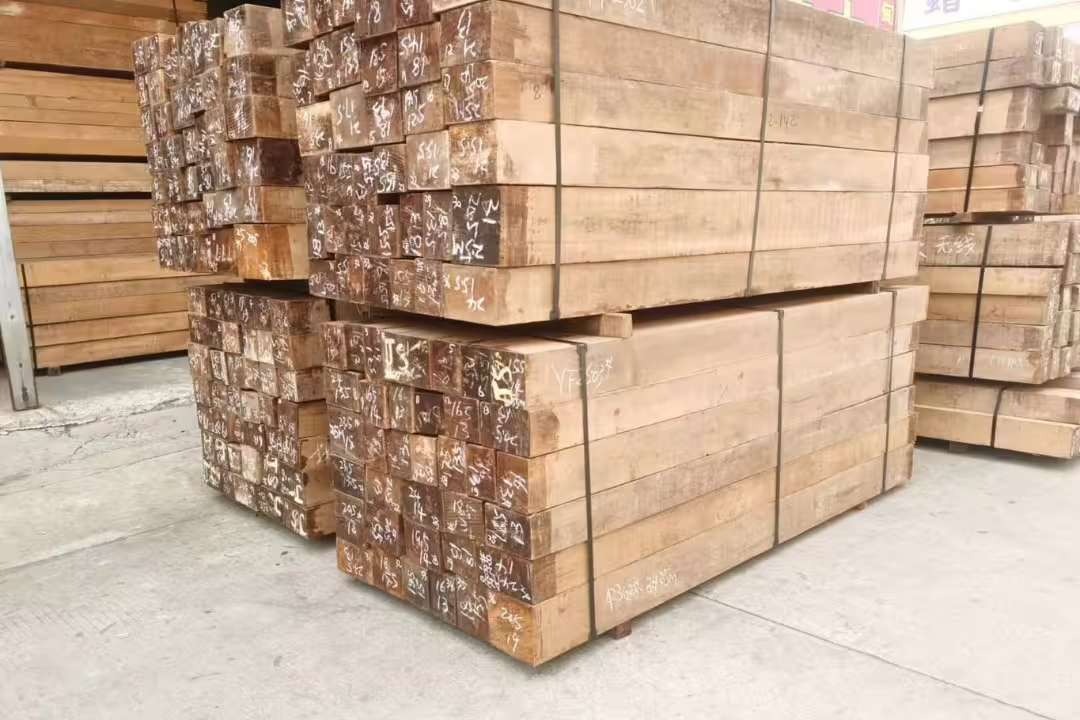
Teak stays expensive because demand remains strong while true premium supply is limited by long rotations and restrictions on natural-forest harvesting. Even when more plantation volume reaches the market, buyers still compete for wide, clear, heartwood-heavy boards.
One more reason prices feel jumpy: many teak products are sold as finished goods (furniture sets, tiles, boat parts), so you’re paying for drying, machining, and wastage. That upstream waste is real—teak is too valuable to “make work” with defective stock, so mills cut around flaws and your usable yield shrinks.
Key end markets
Teak’s biggest pull comes from outdoor living (furniture, decking), marine (yachts, swim platforms), and high-end interior joinery. The marine segment is picky: it cares about slip resistance, heat underfoot, and fastener holding under vibration.
If you’re choosing teak for a sun-baked deck, be aware of surface temperature. Teak runs cooler underfoot than some dense composites, yet in full sun it can still feel hot and dry—like warmed leather—especially after an oil finish darkens the surface.
Plantation vs old-growth
Old-growth teak carries a premium perception for color depth, heartwood share, and board dimensions. Plantation teak can perform very well, but you’ll see more variation: shorter lengths, more sapwood, and sometimes a slightly “blonder” tone that takes finish differently.
A smart workaround for plantation variability is selective use: pick the best boards for visible faces and outdoor edges, then use the rest for internal parts. That approach keeps cost down without gambling the whole project on a few marginal pieces.
Price perceptions
People call teak “overpriced” when they compare it to common hardwoods, but the comparison breaks once you factor service life outdoors. Rebuilding a rotted outdoor bench every few years costs more in time, fasteners, and finish than paying for teak once—especially if your build has curved parts, joinery, or tight tolerances.
If you’re weighing teak against other premium species, it helps to compare use-case fit. For example, ipe is harder and heavier; iroko can be a practical substitute in some projects. You can explore alternatives on this site’s most expensive wood guide to sanity-check what you’re paying for.
Sustainable teak wood sourcing
Plantation sustainability
Plantation teak can be a lower-impact option when it comes from managed land with replanting, legal harvest, and traceable supply chains. The trade-off is that monoculture plantations can reduce biodiversity if they replace natural forest, so “plantation” alone isn’t a guarantee of good practice.
What I look for is traceability: species name, origin country, and chain-of-custody paperwork that matches what the seller claims. Vague labels like “premium hardwood” are where bad sourcing hides.
Deforestation risks
Deforestation risk is highest when teak is tied to illegal logging or unclear land conversion. Risk also rises when buyers chase “old-growth” claims without documentation, because that demand can pressure natural forests and gray-market supply chains.
How sustainable is teak wood? gives a balanced look at sustainability pros and cons, including where teak can help (durable long-life products) and where it can hurt (poorly managed harvesting and land-use change).
SLVK and other certifications
Indonesia’s SVLK (often written SLVK in casual references) is a timber legality verification system intended to reduce illegal logging by tracking legal origin. You’ll also see other certification schemes in the market; the key is that paperwork should be verifiable and consistent across invoices, packaging, and supplier statements.
A common mistake is trusting a single logo on a product listing image. Ask for a certification code or documentation you can cross-check, and confirm the claim applies to teak itself—not just the factory or packaging.
What to look for
Use a quick checklist so you don’t pay premium money for mystery wood with a teak label. Look for heartwood content, consistent milling, and proof of origin.
- Species name shown as Tectona grandis
- Origin stated (country/region) with traceability documents
- Heartwood-focused grading for outdoor uses
- Moisture content appropriate to your climate and use
- Fasteners and adhesives matched to oily hardwoods (stainless/bronze, epoxy when needed)
If your project is strictly outdoors, compare teak against other proven exterior woods in this site’s best wood for outdoor furniture guide, then pick based on maintenance tolerance and budget—not brand reputation.
Teak wood uses and applications
Furniture and joinery
Teak shines in chairs, benches, doors, and exterior joinery because it stays stable and resists rot where joints would otherwise loosen. The sensation you notice in a well-made teak chair is a solid, quiet feel—less creak—because the wood doesn’t swell and shrink as dramatically as softer species.
The pitfall is bad joinery layout: beginners often trap water in flat ledges and tight corners. I’ll chamfer edges, keep faces proud so water sheds, and avoid glue-only outdoor joints on oily surfaces unless I’m using epoxy with proper surface prep.
Decking and marine
Marine teak works because it offers grip when wet, tolerates salt, and doesn’t splinter aggressively when maintained. Teak decks also stay surprisingly “calm” underfoot: you feel texture without the sharp bite you get from some ring-porous timbers after weathering.
Fastener choice is where failures happen. Use marine-grade stainless or silicon bronze, pre-drill clean holes, and keep dissimilar metals away from wet teak to reduce black staining. If you’re building a marine panel, pairing teak with a stable core like marine plywood often reduces movement and checking compared with wide solid boards.
Flooring and interiors
Teak flooring offers a warm, satin feel under socks and holds up well to daily wear compared with many domestic woods. Its oily nature can reduce squeaks when installed correctly, but it also means you need the right finish system—some polyurethane products can fish-eye if the surface isn’t cleaned properly.
For interiors, I like test panels: wipe with solvent, sand to final grit, then apply your chosen finish to see adhesion and color. Skipping the test is how you end up with patchy sheen that looks fine in the shop but turns blotchy under raking window light.
Kitchen and crafts
Teak is popular for cutting boards and utensils because it resists moisture cycling and odor pickup better than many softer woods. When you wash a teak board, water tends to bead briefly before soaking in, and the surface feels less “fuzzy” over time if you keep it lightly oiled with a food-safe product.
A big mistake is soaking teak kitchenware or running it through a dishwasher—heat and long water exposure can stress joints and raise grain. Hand-wash, towel-dry, stand it on edge, and refresh oil when the surface looks dry and pale.
Teak wood products for DIY and home
Crafting sheets
For models, inlays, and small boxes, thin teak sheets give you that real grain look without buying full boards.

Teak Craft Veneer Sheets Pack of 5
- One-eighth inch teak veneers ideal for fine crafting and model work
- four by eight inch panels offer a large working area for projects
- consistent grain and smooth surface ready to sand, stain, or finish
- lightweight and easy to cut with hobby tools or laser cutters
- five-pack gives extra material for experiments and multiple projects
 Buy on Amazon
If you’re laser cutting, consistent thickness matters more than species purity, and “teak-color” sheets can be a practical choice for classrooms and prototypes.

Teak-Color Craft Sheets 12 inch Pack of 24
- Set of twenty-four twelve inch square sheets perfect for kits and models
- three mm thickness offers stable, uniform panels for laser engraving and cutting
- unfinished surface accepts paint, stain, and clear coats evenly
- lightweight and easy to glue for architectural and craft projects
- great value pack for classrooms, hobbyists, and makers
Buy on Amazon
Kitchen and household
A teak board that’s thick and well-finished feels steady on the counter—less chatter under the knife—and it’s less likely to cup after repeated washing if the grain is oriented well.

Three-Piece Teak Cutting Board Set
- Three different sizes cover prep, serving, and slicing needs in one set
- solid teak resists stains and odors for food-safe use
- heavy-duty, thick construction holds up to regular chopping
- slip-over-sink friendly design saves counter space and allows easy draining
- attractive grain makes it a ready-to-gift kitchen essential
Buy on Amazon
For utensils, teak’s biggest advantage is that it stays kind to pans while handling heat without getting as rough as softer woods. Keep them out of the dishwasher, and don’t leave them soaking in a sink where swelling can lift fibers along the edge.
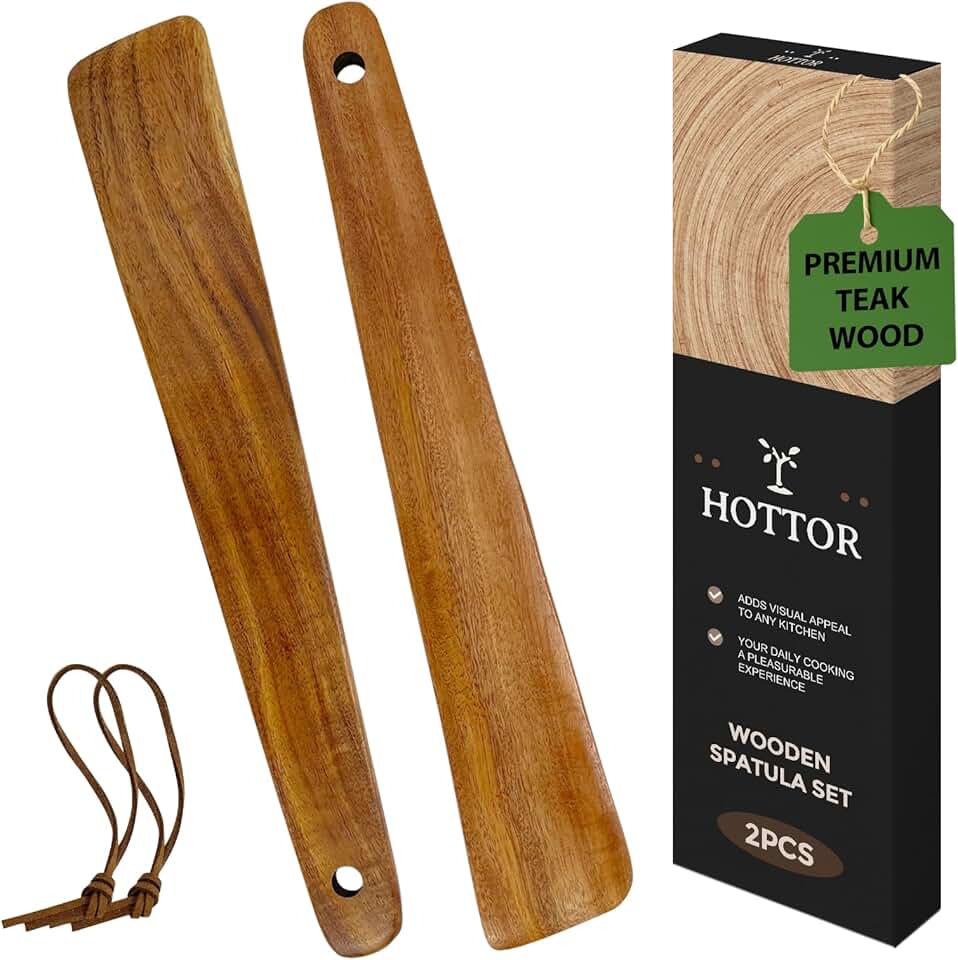
Teak Spatula Duo 12.2 inch
- Flat, wide teak blades are gentle on cast iron and nonstick surfaces
- twelve point two inch length keeps hands away from heat while flipping and stirring
- solid hardwood construction resists warping and absorbs less moisture than softer woods
- smooth edges and ergonomic handle for comfortable turning and serving
- easy to hand wash and maintain for long life
Buy on Amazon
Outdoor and flooring
Interlocking teak tiles are a fast way to add warm traction to balconies and bathrooms, but detail work still matters: trapped moisture under tiles can create a damp smell and dark staining on the underside.

EZ-Floor Teak Interlocking Tiles Set of 10
- Solid teak tiles with oiled finish deliver a warm, natural floor surface
- interlocking design snaps together for tool-free, fast installation
- long nine-slat planks create a continuous, elegant look
- durable and weather tolerant for patios, balconies, and bathrooms
- low-maintenance surface wipes clean and resists mildew
Buy on Amazon
A teak shower mat feels spa-like because it drains fast and stays comfortable underfoot, but it still needs airflow. Lift it to dry the floor underneath, or you’ll get mildew slickness where rubber feet block evaporation.

Foldable Teak Shower Mat
- Natural teak wood resists water and stands up to regular wet use
- foldable design stores compactly and fits different spaces
- slatted surface allows fast drainage and quick drying
- non-slip contact points keep the mat stable on wet floors
- stylish spa look enhances bathrooms, saunas, and poolside areas
Buy on Amazon
Teak lumber and boards
For small repairs and custom trim, pre-surfaced teak strips and boards save time because you can get to fit-up faster with less milling. The main risk is assuming “S4S” boards are ready for glue and finish—wipe, scuff-sand, and dry-fit first to catch any oily surface contamination or minor twist.
Here are a few teak board and strip options people often use for trim, edging, and small woodworking builds:

Whitecap Teak Strip 36 inch
- Half inch thick, pre-surfaced teak strip for clean, ready-to-use edges
- one and three-quarter inch width fits trim, rails, and small projects
- thirty-six inch length minimizes seams and simplifies installation
- naturally rot- and insect-resistant for long life outdoors or indoors
- sands, stains, and glues easily for a professional finish
Buy on Amazon

Premium S4S Teak Board 4 foot
- Smooth S4S surfacing provides straight, clean faces and edges for fast assembly
- half inch thickness and six inch width suit trim, shelving, and custom trim work
- four foot length reduces joints and speeds projects
- sustainably grown timber from managed Costa Rica plantations
- easy to sand, stain, and finish for a refined look
Buy on Amazon
Whitecap Teak Board 36 inch
- Seven-eighth inch thickness for extra strength in furniture and trim
- four inch width works well for handrails and solid accents
- thirty-six inch length provides long, continuous runs with fewer joints
- durable, rot-resistant teak holds up in damp environments
- machines and shapes cleanly for custom carpentry
Buy on Amazon

Whitecap Teak Strip 30 inch
- Half inch thick, narrow teak strip ideal for trim and repairs
- one and three-quarter inch width fits detailed work and edging
- thirty inch length is convenient for cabinetry and nautical projects
- pre-surfaced for easier finishing and fast installation
- naturally weather resistant for both interior and exterior use
Buy on Amazon
Lessons Learned in Practice With Teak Wood
Teak’s biggest surprise is how its oils change the workflow. I’ve had “perfect” glue-ups fail when someone sands, touches the joint with bare hands, then waits too long before gluing—skin oils plus teak oils can reduce adhesion. The fix is repeatable prep: final cut, solvent wipe, glue within minutes, and clamp with even pressure.
Finish problems show up fast outdoors. Beginners often oil teak because it looks great for a week, then they stop; the surface turns blotchy gray with dark rain marks. Stabilize expectations: either let it silver naturally and clean it once or twice a season, or commit to a UV system and a maintenance schedule.
Tooling is another friction point. Teak dust has a peppery smell, and the silica can dull edges; the cut quality drops before you notice, and then you burnish the surface, which hurts finish adhesion. Swap blades sooner than you think, and don’t “polish sand” beyond what your finish needs—over-sanding can close the grain and make oils sit on top.
Metal staining catches people off guard. Black streaks can form where water carries metal particles into the wood, and the stain can feel slightly chalky when dry. Use stainless fasteners, keep steel wool away, and if staining appears, treat it quickly with the right cleaner rather than aggressive sanding that changes board thickness and creates low spots.
If teak is out of budget or unavailable in your area, compare realistic substitutes by use case. I’ll often cross-shop with iroko wood for outdoor furniture, then decide based on machining behavior, sourcing confidence, and how much maintenance the owner will actually do.
FAQs
What Is Teak Wood And Why Is It So Durable?
Teak Is A Tropical Hardwood Prized For Exceptional Durability And Natural Resistance To Rot, Insects, And Moisture.
Its High Natural Oil Content And Tight Grain Slow Water Penetration And Deter Pests, Making It Ideal For Outdoor Furniture And Marine Use. With Minimal Maintenance, Teak Can Retain Strength And Shape For Many Decades.
Is Teak Wood Expensive Compared To Other Hardwoods?
Yes, Teak Is Generally More Expensive Than Many Other Hardwoods.
The Higher Cost Reflects Slow Growth, Excellent Durability, And Strong Demand For Outdoor And Marine Applications. Plantation Teak Is Usually Cheaper Than Old-Growth Teak, And Certified Sustainable Options May Cost More But Offer Better Environmental Credentials.
What Are The Different Types Of Teak Wood (Plantation Vs Old-Growth)?
The Two Common Categories Are Plantation-Grown Teak And Old-Growth (Natural) Teak, Which Differ In Age, Grain Tightness, And Density.
Old-Growth Teak Typically Has Tighter Grain, Higher Density, And Greater Longevity, Often At A Premium Price. Plantation Teak Grows Faster And Is More Uniform And Affordable, But Quality Varies By Management And Milling Practices.
Does Teak Wood Need To Be Oiled Or Sealed Outdoors?
Teak Does Not Strictly Need Oiling Or Sealing To Resist Decay, But Finishing Affects Appearance And Surface Protection.
Untreated Teak Will Weather To A Silver-Gray Patina While Remaining Structurally Sound; Oiling Or Using A Penetrating Sealer Preserves The Warm Golden Color And Can Improve Slip Resistance. Reapply Finishes As Needed, Typically Annually For High-Use Items.
How Can I Tell If Teak Wood Is Sustainably Sourced?
Check For Third-Party Certifications Like FSC Or PEFC And Clear Chain-Of-Custody Documentation To Confirm Sustainable Sourcing.
Ask Suppliers About Harvest Origin, Forest Management, And Whether The Teak Is Reclaimed Or Plantation-Grown With Credible Certification. Avoid Vague Claims And Request Paperwork Before Purchase.