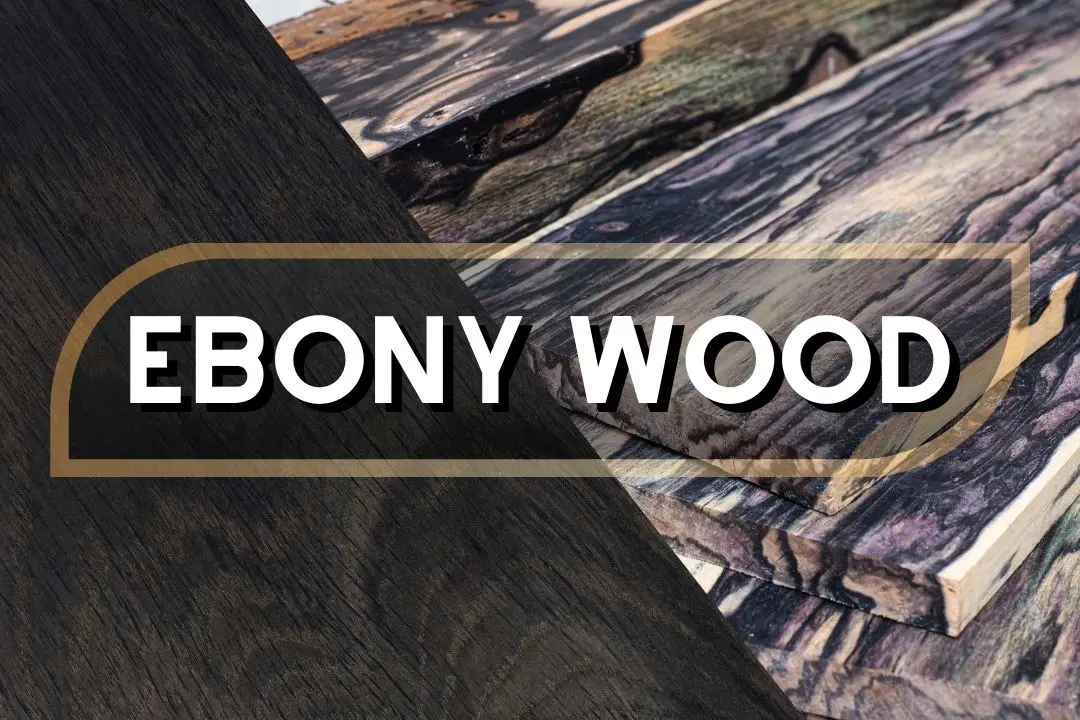

Ebony wood is a group of extremely dense hardwoods from the Diospyros genus, known for dark heartwood, tight grain, and a glassy polish. It’s prized for instrument parts, fine joinery, and wear surfaces because it resists dents and holds crisp detail, but it’s costly and hard on tools.
Table of Contents
You’ll see “ebony” used loosely in stores, so this guide breaks down what counts as true ebony, how different species behave on the bench, and what to watch for so your parts don’t crack, chip, or glue-fail after you’ve invested the time.
What Is Ebony Wood?
Definition and genus
True ebony comes from the Ebenaceae family, mainly the Diospyros genus (the same genus that includes persimmon). In the shop, “ebony” should mean wood with a fine, closed pore structure, very high density, and heartwood that ranges from deep brown to jet black—rather than any random dark-stained hardwood.
A common beginner mistake is buying “ebony” that’s really dyed maple or ebonized pearwood; it looks right until you cut it and the pale interior shows. A quick workaround: cut a tiny shaving from an inconspicuous edge—real ebony stays dark through the thickness (or shows natural streaks), and it feels noticeably heavier than most woods of the same size.
Heartwood vs sapwood
Heartwood is the mature, darker center of the tree and the part sold as ebony; sapwood is the lighter outer band. Many species show a sharp boundary—if you plane across it, you’ll literally feel the transition as the blade goes from slightly “waxy-hard” resistance in heartwood to a softer, more fibrous cut in sapwood.
For instrument and handle work, sapwood can be a risk because it’s often less durable and can move a touch more with humidity swings. If you want the contrast for design reasons, treat sapwood like a different material: seal it fast, keep it out of high-wear zones, and stabilize thin sections so seasonal movement doesn’t telegraph a glue line.
Color and grain
Color ranges from uniform black (classic “piano key” look) to dramatic brown/black striping (Macassar) to high-contrast cream with black veining (Black and White Ebony Wood). Grain is usually straight to slightly interlocked with a very fine texture, which is why ebony can take a finish that feels like cool stone under your fingertips after buffing.
Don’t assume “blacker is better.” Some of the most stable, usable stock I’ve milled had subtle streaks; ultra-uniform black can come with hidden stress that shows up as hairline checking after you thickness it. If you’re building thin parts (inlays, headplates), prioritize soundness over color purity.
Ebony Wood Tree: Species and Origins
Diospyros species
An ebony wood tree is typically a Diospyros species, and “ebony” in trade can refer to multiple species with very different working behavior. Gaboon Ebony (often Diospyros crassiflora) is the familiar jet-black material used on fretboards, while Macassar ebony wood (Diospyros celebica) is striped and often sold as veneer and high-end lumber.
Name confusion is constant with exotics, so I always match three things before buying: botanical name, origin, and whether it’s solid wood or veneer. If a seller can’t provide at least the species group and source region, assume you’ll get mixed stock (streaky, sapwood-heavy, or substituted species).
Tropical distribution
Ebony species grow across tropical Africa, India/Sri Lanka, Southeast Asia (including Indonesia), and parts of the Americas. That distribution matters because climate and soil influence texture and stability; boards from wetter forests often arrive at higher moisture content, and the first week in a heated shop can reveal end checks if the ends weren’t sealed well.
If you’re pairing ebony with a lighter wood (maple, ash, walnut), remember that ebony’s movement is small but its stiffness is high—so seasonal stress often shows up in the lighter wood or at glue seams. I like to pre-finish hidden faces and use joinery that gives a little mechanical insurance, not just glue.
Slow growth and scarcity
Most ebony is slow-growing, which is a big reason it’s scarce: tight grain and high density take time. Slow growth also means defects can be costly—one internal shake or crack can wipe out a large portion of usable heartwood, so suppliers often sell smaller blanks rather than wide, clear boards.
Plan your project to match what the material market actually provides. If you need wide panels, consider ebony veneer over a stable core instead of solid ebony; you’ll get the look without the cracking risk and without burning through rare stock on hidden structure.
Ebony Wood Properties: Hardness, Density, Durability
Density benchmarks
Density is ebony’s defining trait: many ebonies sink in water and feel “cold” and heavy in the hand. Reported average dried weight for ebony is around 955 kg/m³, with some types like Macassar often cited in the 1,000–1,300 kg/m³ range, which explains why it turns cleanly but can punish edges and snap brittle details if you rush cuts.
For quick comparison across species, see our guide on density of wood and use it to sanity-check seller claims. Wood Database’s ebony overview is a useful starting point for density figures and species notes, but I still treat each board as its own case because drying history changes behavior.
| Ebony type (common name) | Typical look | Density / hardness notes (reported) | What it means in the shop |
|---|---|---|---|
| Gaboon Ebony | Near-uniform black | Janka ~3,080 lbf; very high density | Excellent polish; tools dull fast; chips if you lever with a chisel |
| Macassar ebony wood | Brown/black striping | Often cited ~1,000–1,300 kg/m³ | Stunning figure; higher crack risk during drying; predrill everything |
| Black and White Ebony Wood | Cream with black veining | Often cited ~825 kg/m³; Janka ~1,780 lbf | Easier than Gaboon; still dense; tearout can follow the veins |
Janka hardness ranges
Janka hardness for ebony varies by species, but it’s consistently high compared to common hardwoods. In practical terms, that hardness is why ebony fretboards resist divots from strings and why knife handles keep crisp edges around pins and liners—but it’s also why standard HSS bits feel dull quickly and why routing can leave burn marks if your feed rate is timid.
If you’re new to hardness numbers, check our wood hardness scale for context. The pro move is to plan your milling sequence to minimize re-cutting: rough to size, rest, then final-pass with sharp carbide so you’re not grinding away expensive steel on repeat machining.
Decay and termite resistance
Durability is a big reason ebony shows up in heirloom work: many species resist insects and decay better than typical furniture woods. That said, “resistant” doesn’t mean invincible—if ebony is trapped against wet metal hardware or sealed unevenly, you can still get staining, swelling at screw holes, or mildew on the finish film.
A mistake I see is using ebony outdoors because it’s “rot-resistant.” Most ebonies still aren’t a great exterior choice because UV and cycling moisture can stress-check the surface. If you need true outdoor performance, compare with purpose-built species like lignum vitae or choose a weatherproof composite and use ebony as protected trim.
Finish and polish
Polish is where ebony pays you back: sanded through the grits and burnished, it can look almost liquid, and the surface feels slick and cool like a river stone. Oil alone can look great on small objects, but on high-touch parts (knife handles, tool totes) a hardwax oil or thin film finish often holds up longer against sweat and grime.
Watch for a common trap: sanding too aggressively at low grits can leave deep scratches that only appear after oiling, when the wood turns darker and glossy. My workaround is simple—after your last shaping cut, jump to a higher grit sooner than you would with oak, and keep a raking light on the piece so scratch patterns show before finish.
Pros and cons
- Pros: exceptional wear resistance; fine texture for crisp detail; takes a mirror-like finish; excellent for slim, high-stress parts (fretboards, inlays, pins).
- Cons: expensive and often sold in small sizes; can crack during drying and after milling; dulls cutters; gluing can be finicky if surfaces are oily or burnished.
If you’re trying to decide whether ebony makes sense for your build, compare it with other dark exotics like wenge wood for visual impact at a lower cost, or use ebony only where its hardness truly matters (contact points and edges) and save money elsewhere.
Types of Ebony Wood
Gaboon Ebony
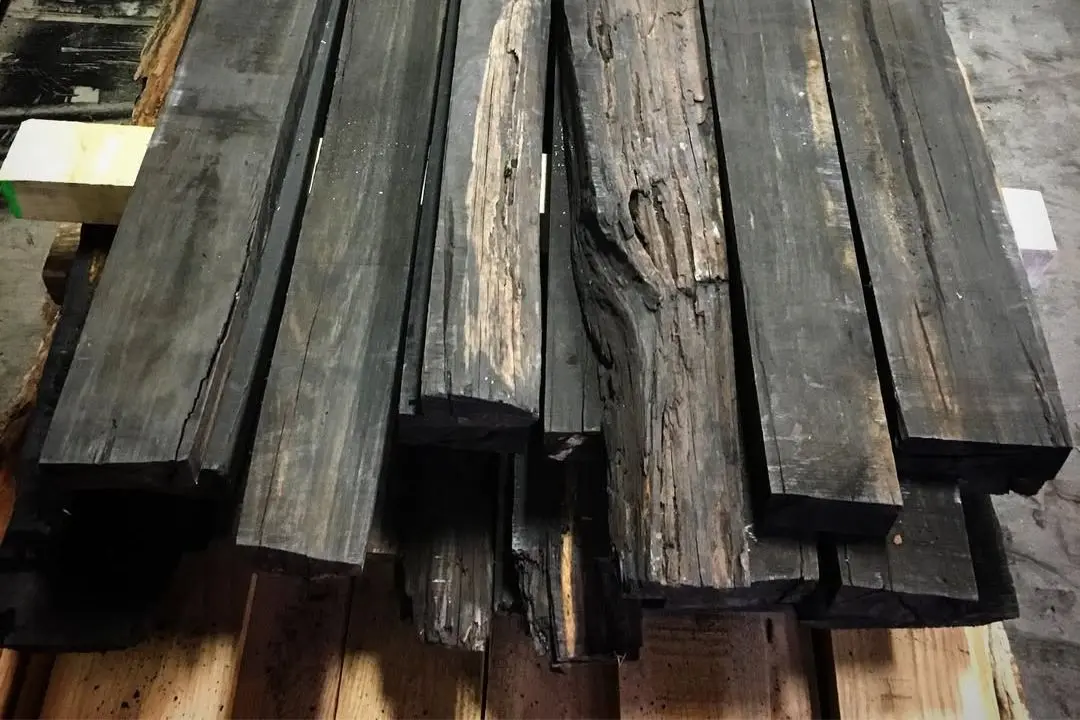
Gaboon Ebony is the classic “black ebony” most people picture: very dark heartwood, minimal visible pores, and a smooth, even texture that can be brought to a high gloss with careful sanding. On a sharp plane iron it produces tiny, brittle shavings and a faint spicy-woody smell; on dull edges it chatters and chips at corners, so I treat it like a dense plastic—sharp tools, light passes, no prying.
If you’re buying blanks for fretboards, turning, or precision parts, sizes that reduce glue-ups and splices save headaches because ebony glue lines can telegraph under gloss. The two blanks below hit common use cases without forcing you into wide, rare board stock.

Gaboon Ebony Board 1-1/2 x 18 inch
- Long 1-1/2-inch by 1-1/2-inch by 18-inch piece perfect for necks and long projects
- Straight-grained Gaboon ebony offers consistent stability
- Dense, hard surface that takes a fine polish
- Ideal for turning, fretboards, and precision woodworking
- Minimal defects reduce need for splicing or patching
 Buy on Amazon
Macassar ebony wood
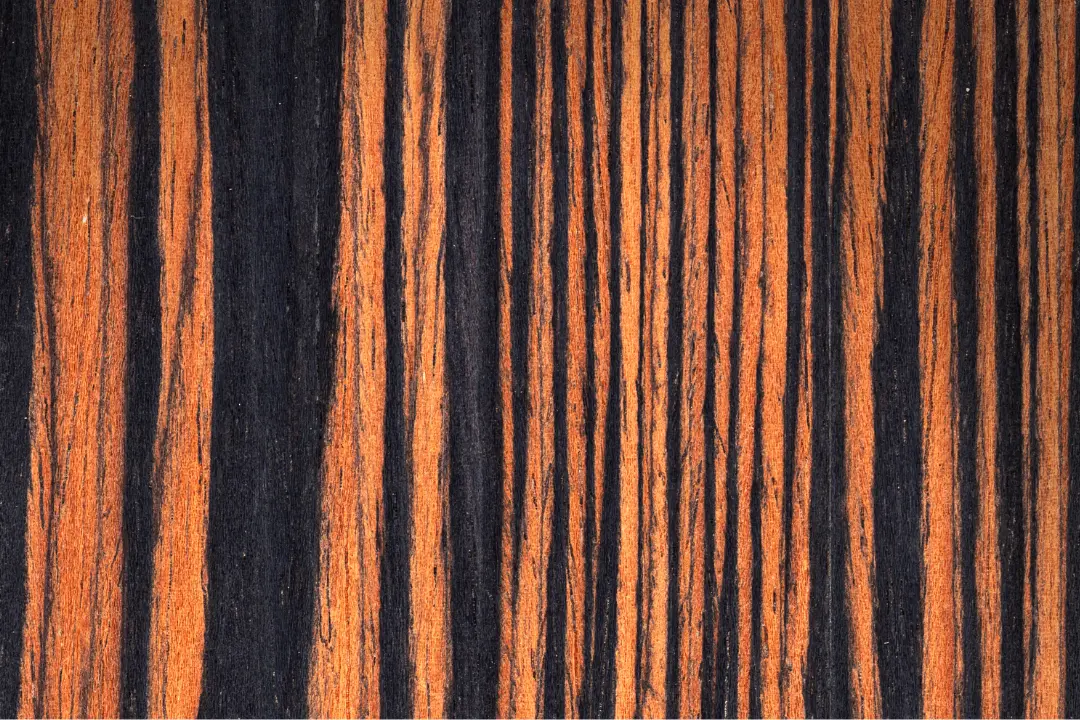
Macassar ebony wood is the striped showpiece: chocolate-to-reddish brown bands with black streaking, often with a lively, slightly wavy grain. It’s dense enough that drilling feels like pushing through hard rubber, and it’s known to crack if it’s rushed through drying or if you thickness it hard in one session and leave it overnight in a dry shop.
I keep Macassar parts a hair oversized, sticker them, and let them settle before final thickness—especially for wide faces like headplates or cabinet doors. For a deeper species breakdown and typical appearance, see our macassar ebony guide.
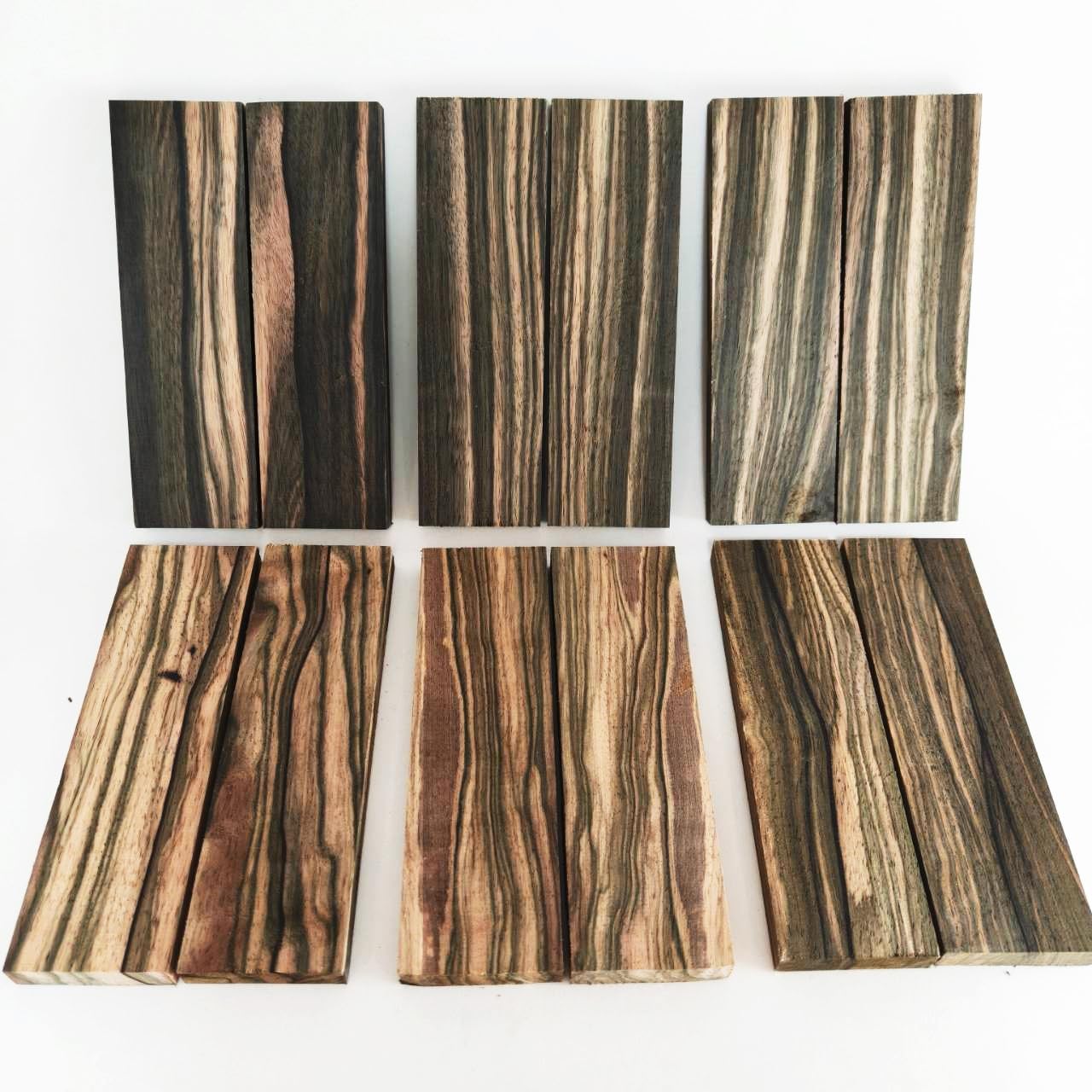
Macassar Ebony Burl Knife Handle Scales 2 Pack
- Includes 2 unique Macassar ebony blanks for custom handles and crafts
- Sized about three eighth inch by one and one half inch by five and one eighth inch for easy shaping
- Rare striped look with dark tones and golden streaks for standout results
- Strong resilient hardwood built for durable everyday grip pieces
- Smooth surface makes cutting sanding and finishing easier
Buy on Amazon
Black and White Ebony Wood
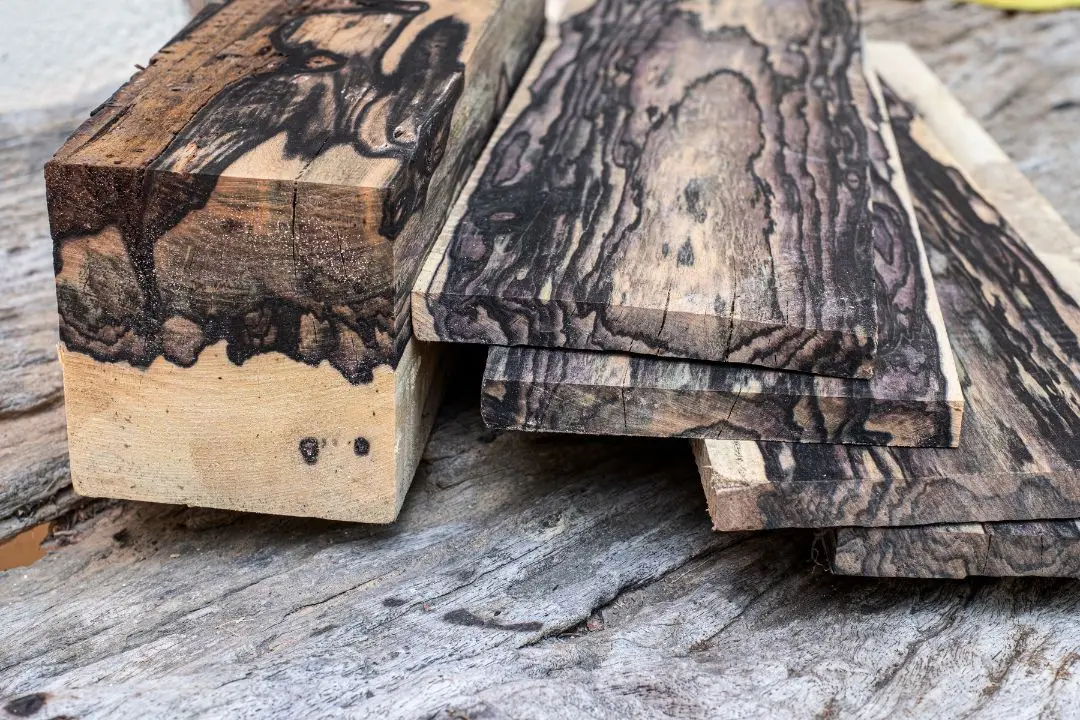
Black and White Ebony Wood flips the classic look: pale cream wood with bold black veining, giving dramatic contrast in handle scales and turned objects. The visual “ink lines” can hide small tearout until finish hits, so I do final passes with a high-angle cutter or a skewed cut on the lathe to keep the surface clean.
This is also a smart pick when you want the ebony story without the absolute hardest stock; reported hardness is lower than Gaboon, which can make it a bit friendlier for detailed carving. If you’re planning a multi-wood design, you can pull complementary tones from our colors of wood reference and avoid stains that muddy the contrast.
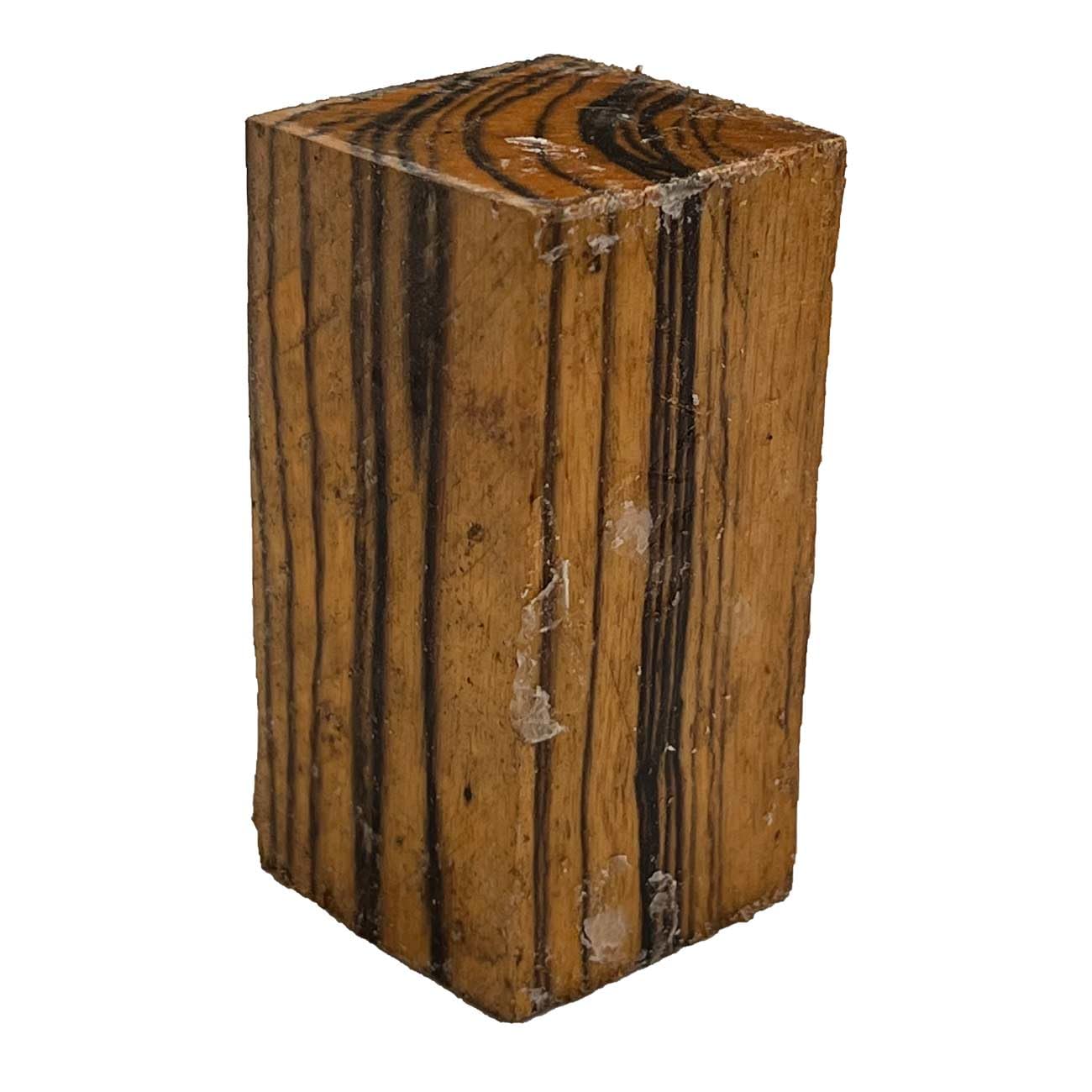
Pale Moon Ebony Carved Bottle Stopper Blank
- Black and White Ebony also called Pale Moon Ebony with dramatic natural contrast
- Scientific name Diospyros malabarica
- Size is one and one half inch by one and one half inch by three inch
- Listed as not dried with about 20 percent moisture content
- Thin line cracks or minor defects may be present and are typical for this wood
Buy on Amazon
Indian ebony
Indian ebony (often associated with Diospyros ebenum) tends to be dark, fine-textured, and well-suited to turning blanks, small instrument parts, and inlays. I’ve had the best luck using it in smaller cross-sections where its strength shines and internal stress can’t build up across a wide panel.
A common mistake is treating it like rosewood and skipping surface prep before glue. Even if it doesn’t feel oily, I still scuff-sand right before glue-up and avoid over-burnishing with high grits on joint faces so the adhesive can get a grip.
African ebony
African ebony is a trade label that may refer to multiple African Diospyros species, and it can overlap in conversation with African blackwood (which is a different wood used in woodwinds). If your project is instrument-related, don’t guess—confirm the species and compare with our African blackwood article so you don’t buy the wrong material for tonal or machining expectations.
African-sourced ebony often arrives in smaller, higher-grade billets meant for export and specialty work. That’s great for stability, but it also means you should design joinery around short lengths: splines, hidden pins, and laminated cores can let you use short stock without ugly end grain.
Pale Moon ebony
Pale Moon ebony is prized for its straw-to-cream base with bold dark streaking that can look like ink wash. It’s a strong candidate for decorative panels, box lids, and inlays where you want “ebony character” without an all-black surface that hides the craftsmanship.
Because the contrast is the whole point, UV protection matters more than people think; some finishes will amber and shift the light areas. Test your finish on an offcut and view it in sunlight before committing, so the background tone doesn’t drift warmer than your design can tolerate.
Texas ebony
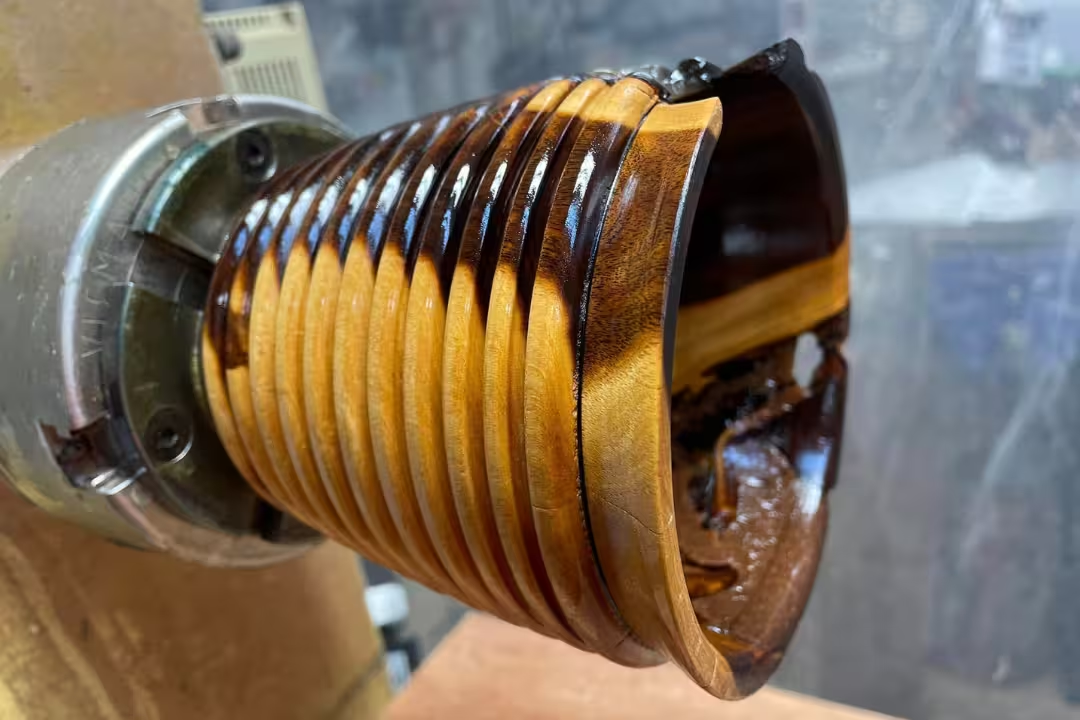
Texas ebony isn’t a Diospyros ebony, but it’s sold under the ebony name because it can be very dark and dense. Expect more variable color (browns, purples, and dark streaks) and a different working feel—less “glassy” than Gaboon, with occasional grain reversals that can tear if you plane against them.
If you’re choosing it for handles or small furniture accents, treat it like a tough local exotic: predrill, use sharp cutters, and don’t count on color uniformity across a set. Sorting blanks under bright light before milling saves you from mismatched parts after finish.
Calamander
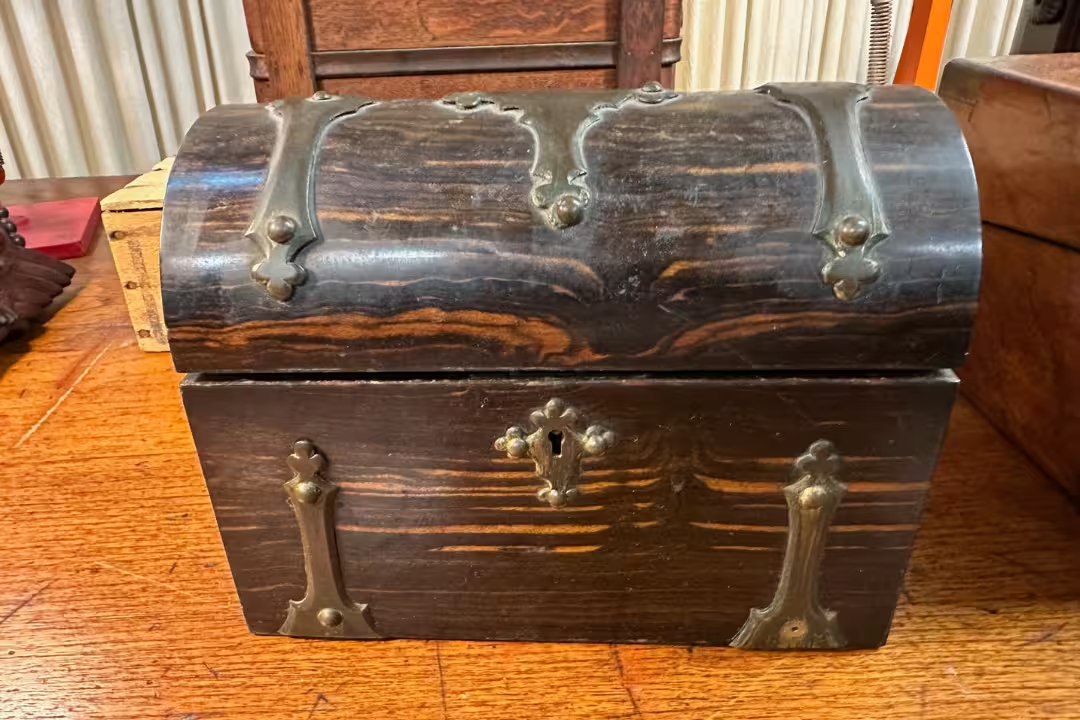
Calamander (often tied to Diospyros quaesita) is famous for dramatic striping and a luxurious look, frequently used as veneer. It can be very hard and splintery at edges, so I back up cuts and ease corners early to prevent a small chip from turning into a long tear that ruins a show face.
Veneer work is where it shines: stable substrate, predictable movement, and you get the pattern across larger surfaces without needing wide solid stock. If you’re new to veneer, practice your glue-up rhythm on cheaper species before committing calamander to a panel.
Bombay ebony
Bombay ebony (often linked to Diospyros montana) is another name that shows up in trade lists and can vary in appearance and working behavior. I approach it the way I would any unfamiliar “ebony”: test-cut for brittleness, check for hidden cracks at the ends, and decide early if it’s better suited to small parts than wide faces.
Don’t overpay for a name if the piece doesn’t meet your needs. If you need deep black, buy for color and defect-free heartwood; if you need stability, buy for straight grain and good drying rather than labels.
Brazilian Ebony
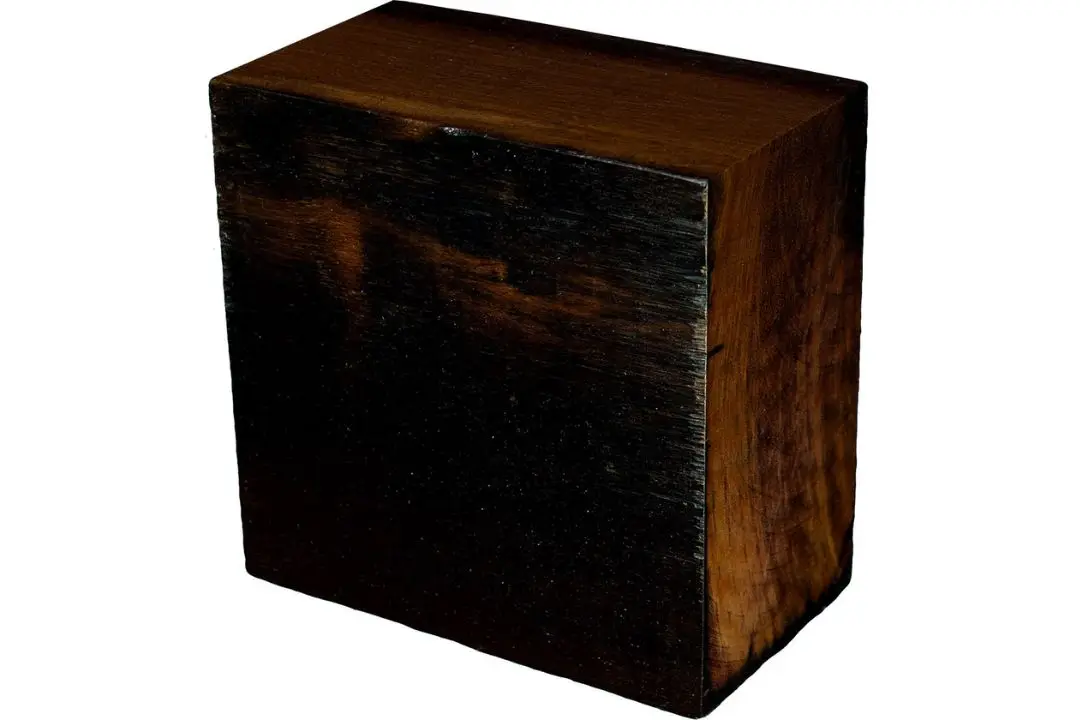
Brazilian Ebony is commonly used as a trade term for very dark, dense woods from Brazil, and sometimes for Diospyros species from the region depending on the supplier. Expect variability: some stock behaves like classic ebony (tight grain, high polish), while other “Brazilian ebony” offerings act more like a different dense hardwood that simply shares the color.
If you want a safer, more predictable Brazilian dark-wood purchase for large surfaces, compare with documented species like Brazilian rosewood (when legally sourced) or choose ebony only for accents and working edges. That approach reduces waste when a board surprises you with hidden defects.
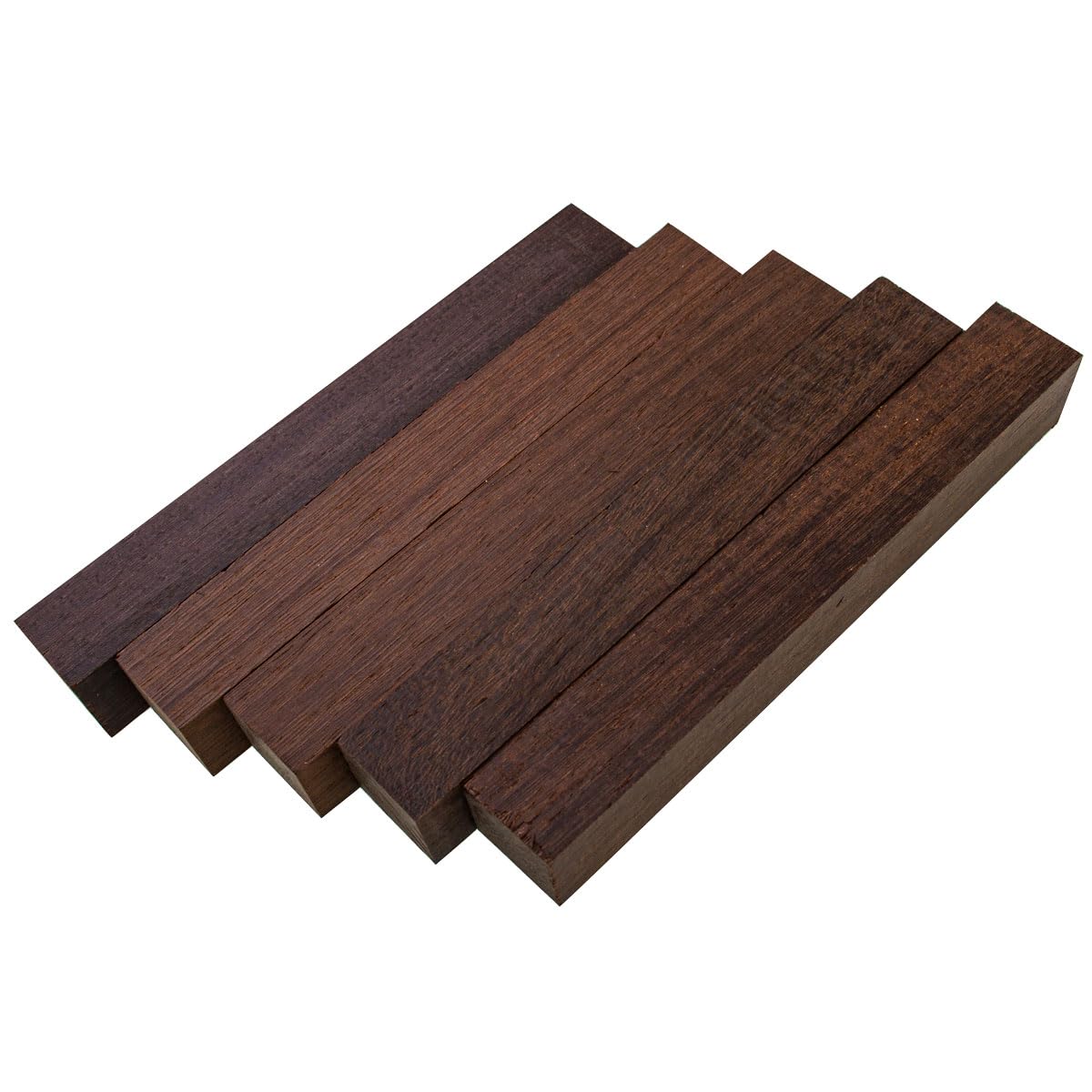
Brazilian Ebony Pen Blanks 5 Pack Premium Turning Stock
- Elegant Brazilian ebony with even dark brown color and tight straight grain
- Precut pen blank size three quarter inch by three quarter inch by five inch
- Five pack gives enough stock for multiple matching builds
- Dense durable wood turns smoothly and polishes to a high gloss finish
- Sourced from South American forests and loved by pen turners
Buy on Amazon
Ebony Wood Uses: Where It Excels
Musical instruments
Musical parts are ebony’s home turf: fretboards, bridges, nuts, and touch points benefit from its wear resistance and ability to machine cleanly to precise dimensions. When you rub a finished ebony fretboard, it feels slick and cool, and it stays that way longer because the surface doesn’t fuzz up like open-pored woods.
Risk to avoid: micro-chipping at fret slots and edges. The fix is boringly effective—use a dedicated slotting blade or very sharp saw, support the cut, and wick thin CA only after dry-fitting so you don’t create brittle glue pockets where future chips start.
Furniture and cabinetry
Furniture accents (drawer pulls, stringing, edge banding, inlaid details) get maximum benefit from ebony with minimal risk. Full solid ebony panels are possible, but they’re where I see the most regret—movement stress, checking, and the pain of sanding a large surface of ultra-dense wood without leaving swirl marks.
For casework, ebony veneer over stable cores is often the smartest route. If you want contrast without the cost, compare other dramatic species like zebra wood for striping, then reserve ebony for edges that take abuse.
Knife handles and tools
Knife scales and tool handles benefit from ebony’s dent resistance and smooth finish. In the hand, a finished ebony handle feels hard and sleek, and it warms slowly compared with lighter woods—noticeable on a cold day in the shop when you first pick it up.
Here are ready-cut blanks that speed up handle work and reduce waste; I like these when I need consistent thickness so pins and liners line up without extra milling.
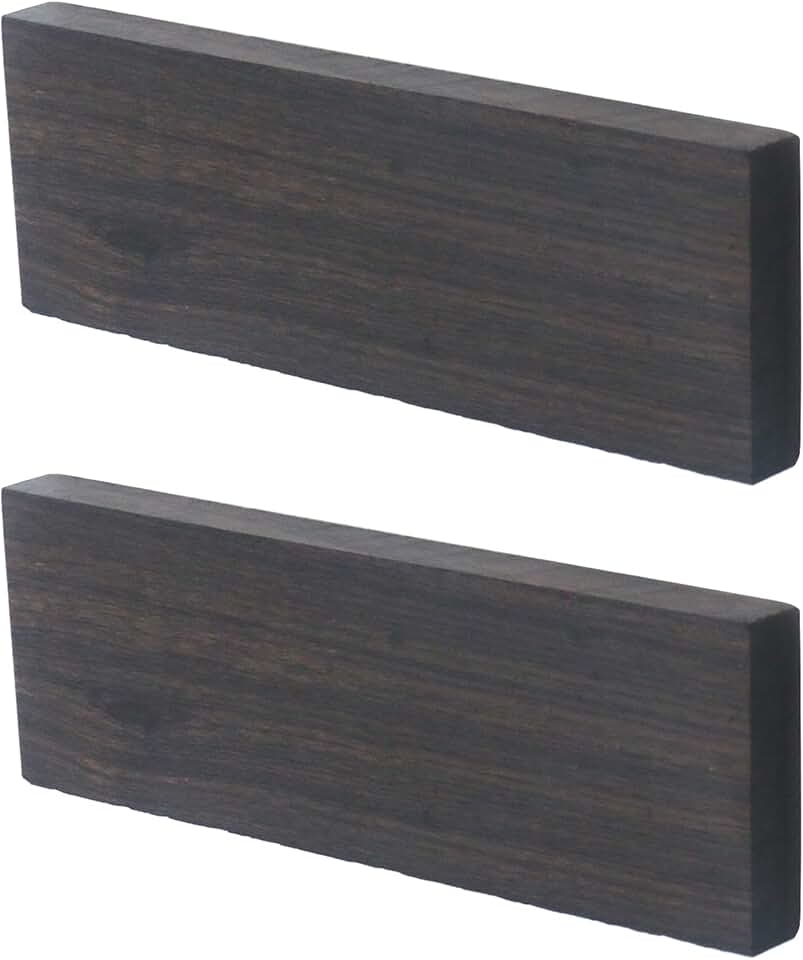
Black Ebony Handle Blanks - Pair
- Dense, dark ebony wood for a striking finished look
- Ideal for guitar parts, knife handles, and small woodworking projects
- Smooth surface that sands and polishes to a high sheen
- Stable hardwood that resists warping and shrinkage
- Ready-to-shape blanks for carving, turning, and laminating
Buy on Amazon

Ebony Lumber Blanks 2-Pack
- Precision-cut blanks sized about 4.72-inch by 1.57-inch by 0.39-inch for consistent results
- Dense exotic wood with deep color and tight grain
- Excellent choice for knife scales, inlays, and small handles
- Smooth faces reduce prep time before gluing or finishing
- Durable, stable material suited to fine woodworking and repairs
Buy on Amazon

Ebony Handle Plates 2-Pack
- Thicker 4.72-inch by 1.57-inch by 0.98-inch blanks for sturdy handles
- Rich black hue and fine grain for a premium appearance
- Good machinability for carving, routing, and shaping
- Sand and polish to a smooth, glassy finish
- Stable hardwood ideal for instruments, knives, and craft projects
Buy on Amazon
Common failure point: epoxy bond lines on ebony can pop if the surface was sanded too fine or contaminated with oil and dust. My workaround is to sand glue faces to a moderate grit, blow out pores, wipe with a fast-evaporating solvent, then glue before the surface has time to get burnished or re-contaminated; that combo gives reliable adhesion.
Flooring and wear surfaces
Wear surfaces like thresholds, plane totes, and small flooring inlays benefit from ebony’s hardness, but full-room ebony flooring is rare for good reasons: cost, sourcing concerns, and the difficulty of sanding/refinishing such a dense species without visible tooling marks.
If you’re set on the look underfoot, use ebony as border inlay or medallions set into a stable, common flooring species. You’ll get the “pop” where the eye goes and avoid the headache of maintaining a huge surface that shows every scratch as a bright line in a dark field.
Turning, carving, inlays
Turning blanks in ebony can finish beautifully, but the margin for error is small: catches snap corners and can launch chips because the wood is stiff and brittle. On the lathe, I use razor-sharp tools, lighter cuts than I would on walnut, and I sand with a gentle touch because heat builds fast and can cause checking that only shows up hours later.
These small-format blanks and dowels are useful when you want clean, repeatable parts for pens, inlays, and compact handles without buying big stock.

Compact Ebony Handle Plates 2-Pack
- Convenient pre-cut size at 3/8-inch by 1.5-inch by 5-inch for small builds
- Dark, uniform grain gives a high-end look to finished pieces
- Easy to mill, sand, and glue for quick assembly
- Dense hardwood resists wear for long-lasting handles
- Great for instrument parts, knife scales, and small turned items
Buy on Amazon

African Blackwood Dowels 10-Pack
- Ten uniform dowels around 15-centimeter by 1.2-centimeter for pen making and turning
- Dense African blackwood yields superb polish and rich color
- Consistent diameter helps with easy gluing and assembly
- Ideal for pen blanks, small handles, and craft dowels
- Ready for sanding, drilling, and finishing to a high sheen
Buy on Amazon
Traditional medicine use
Traditional use of ebony (species-dependent) has included folk remedies in some regions, but that topic is often mixed with non-ebony Diospyros uses and isn’t a safe DIY lane. If you’re researching ethnobotany, treat it as history and consult medical professionals for anything health-related; wood dust and extracts can irritate skin and lungs, and misidentification is easy.
From a maker’s perspective, the practical takeaway is safety: ebony dust is fine and clingy, and it sticks to sweaty skin and the inside of your nose. I use strong dust collection and a respirator because the dust exposure builds up during sanding and routing.
Working With Ebony Wood: Practical Considerations
Cutting and tool wear
Tool wear is real with ebony: expect faster dulling than on maple or walnut, and plan your workflow around carbide where possible. When I rip ebony on a table saw with a less-than-sharp blade, I can smell the heat immediately—an acrid “hot wood” scent—and the cut edge may show burnishing that later fights glue and finish.
Workaround: raise feed rate to reduce burning, keep blades clean, and take lighter passes on jointers/planers. For routers, climb-cutting can reduce tearout in tricky grain, but it can also grab—so use it only with solid workholding and small bite to keep kickback risk under control.
Drying and cracking risk
Cracking happens for two main reasons: ebony’s density slows moisture exchange, and internal stress released during milling shows up as checks. If you take a thick blank down to final size in one go, it may look perfect, then the next morning you’ll find hairline end checks that feel like tiny razor cuts under your fingernail.
My practical routine: seal ends (even on small blanks), rough mill oversized, sticker for airflow, and let it rest in the same environment where it’ll be built and finished. If you’re in a heated winter shop, slow things further by keeping blanks in a closed cabinet to reduce sudden humidity drops.
Gluing and machining
Gluing ebony is usually fine, but it’s easy to sabotage: oily surfaces, burnished faces, and fine dust can weaken bonds. I’ve had joints fail when someone “polished” the glue face to 400 grit—beautiful, glossy, and nearly non-porous—so the glue had little to bite into.
The pro fix is boring: sand glue faces to a moderate grit, dry-fit, then glue soon after prep. If you must wait, re-scuff right before assembly. For machining, predrill screw holes and consider thread-forming screws or brass inserts so you don’t split thin ebony at fastener edges.
Sanding to high polish
High polish comes from a clean surface, not brute-force sanding. Ebony “shows everything,” so I sand with fresh paper, vacuum between grits, and avoid pressing hard—pressure creates heat and can cause micro-checking that only appears after oiling.
If you want a near-mirror sheen, finish schedules that include burnishing or buffing work well, but test first because some buffing compounds can lodge in pores and leave white specks on jet-black stock. A simple workaround is a final wipe with solvent after pre-finish sanding to reveal hidden scratches and contamination before you commit to your topcoat.
Steam bending notes
Steam bending ebony is possible in thin sections, but it’s not forgiving: density and brittleness raise the chance of surface checking on tight radii. If you need curves, laminating thin ebony veneers over a form usually beats trying to bend a solid strip; you’ll get consistent curves and fewer surprises.
If you try bending anyway, use straight-grained stock, increase strap support to reduce tension on the outside of the bend, and accept that some pieces will fail. When a bend goes wrong, it often fails suddenly with a sharp “crack” and a splintery break, so wear eye protection and keep hands clear of the line of fire.
Lessons Learned in Practice
Buying ebony is where most projects go sideways. The photos online rarely show end grain or defects, so I ask for end-grain shots and I look for hairline checks that run like pencil marks from the ends; if they’re there, I assume I’ll lose extra length trimming to sound wood.
Thicknessing is the next friction point: ebony often moves after you relieve stress. I’ve had perfectly flat blanks cup slightly after planing, and the fix was time—rough mill, wait, then final mill. Skipping that rest step is the fastest way to end up chasing flatness and turning a thick blank into a too-thin part.
Edge chipping catches beginners by surprise because ebony looks smooth but behaves brittle at corners. On router work (pickup cavities, inlays, small roundovers), I use a backer, climb-cut for a whisper pass where safe, and I leave edges a touch “fat” until the last moment so any chip gets trimmed away during final sizing.
Glue failure is usually operator error, not the wood. The pattern I see is polished glue faces, dusty clamps, and long open times. The workaround is a repeatable prep routine: scuff, clean, glue, clamp at sensible pressure, and don’t over-clamp—too much pressure can starve the joint and squeeze adhesive out of the already tight-grained surface.
Color matching matters more than people expect. Two “black” ebony blanks can finish differently—one deep charcoal, the other warm brown-black—so I lay all parts out under the same light and wet them with solvent to preview the final tone. That five-minute test prevents the classic mistake of assembling a set and realizing one handle scale reads “brown” once oiled.
Sustainability, Cost, and Alternatives
Overharvesting and threatened status
Sustainability is a real concern with many ebony species because slow growth and high demand invite overharvesting and poor forestry practices. If you care where your wood comes from, ask for documentation, look for legally harvested stock, and be wary of “too perfect” pricing on large, uniform black pieces.
As a baseline reference on the genus and its commercial history, Britannica’s ebony overview provides helpful context. In day-to-day buying, I still prioritize reputable specialty dealers and smaller blanks because that’s where traceability and quality control tend to be better.
Why ebony is expensive
Cost comes from scarcity, waste, and grading: many logs don’t yield wide, flawless black heartwood, and defects can force mills to cut around cracks, sapwood, and stress. Add slow growth, export controls, and the fact that ebony is often sold in small, premium blanks, and you get a material that rewards careful planning and punishes experimentation on full-size parts.
If you’re benchmarking “high-end” woods for a project budget, our most expensive wood roundup can help you decide where ebony fits and where a substitute gives a better return on effort.
Substitutes for projects
Alternatives depend on what you need from ebony: color, hardness, polish, or status. For a dark look without the same tool wear, I often recommend experimenting with stained maple/pearwood (if interior color isn’t a concern), or using naturally dark species that are easier to source in larger sizes.
- For dark color: choose documented dark species from our dark wood types list and reserve ebony only for accents.
- For hardness: compare candidates against our hardest wood in the world guide and match to your wear needs.
- For oily, glossy exotics: consider options like cocobolo if you want dramatic color and a natural luster (with its own allergy and gluing considerations).
The biggest mistake is substituting without redesigning the build. Ebony’s stiffness and wear resistance let you go thinner in some places; if you swap to a softer wood, add thickness, change joinery, or add a protective finish so the part doesn’t dent, swell, or wear through sooner than expected.
FAQs
What Tree Does Ebony Wood Come From?
Ebony wood comes from several tropical hardwood trees in the genus Diospyros. These slow-growing trees, found across Africa, Asia, and Madagascar, produce a very dense, dark heartwood used for fine woodworking. Notable species include Diospyros ebenum, Diospyros crassiflora, and regional varieties prized for instruments and luxury items.
What Are The Main Types Of Ebony Wood?
The main types of ebony are Gaboon (African), Ceylon (Sri Lankan), and Macassar (Southeast Asian) varieties. Each differs in color, grain, and density: Gaboon is often jet-black, Ceylon tends toward deep brown tones, and Macassar shows bold brown-and-black striping used for decorative veneers and instruments.
Is Gaboon Ebony Real Ebony And Why Is It So Black?
Yes — Gaboon ebony (Diospyros crassiflora) is genuine ebony and is prized for its rich black heartwood. Its deep color results from slow growth and a high concentration of dense heartwood that absorbs little light and polishes to a glassy finish. Gaboon is mainly harvested in West and Central Africa and is highly valued for instruments and carving.
What Makes Macassar Ebony Wood Different From Other Ebony?
Macassar ebony is distinct because it displays dramatic brown and black striped figure instead of uniform black. Sourced from Diospyros species in Southeast Asia, the contrasting streaks and varied grain make it highly decorative for veneers, furniture accents, and instruments. Its visual appeal and rarity set it apart from other ebonies.
Why Is Ebony Wood So Expensive And Is It Sustainable?
Ebony is expensive because it grows slowly, yields relatively little usable heartwood, and is in high demand for its density, color, and ability to take a fine polish. Many species have been overharvested, so supply is limited and prices rise. For sustainability, choose certified wood, reclaimed ebony, or ethically sourced alternatives when possible.