
Acacia Wood: Definitive Guide to Types, Properties, and Uses

Acacia wood is a broad trade term for hardwoods cut from trees in the Acacia group (and closely related “wattle” species), valued for rich color, bold grain, and above-average durability. It’s used for furniture, cutting boards, and flooring, but performance varies a lot by species, so matching the right acacia to the job matters.
Table of Contents
What is acacia wood?
Acacia genus overview
In shops, acacia wood usually refers to lumber from species commonly called “wattle,” many of which are native to Australia and the Pacific, with others spread through Africa, Asia, and the Americas. Botanically, Acacia sits in the legume family, and the name gets used loosely in retail listings—so I always verify the species name (or at least origin) before assuming hardness, stability, or rot resistance. For a quick botanical overview and distribution, see Acacia (Wikipedia).
“Acacia” also shows up on labels for engineered tops, butcher-block, and mixed-species panels where the visible lamella looks like acacia but the core doesn’t. That’s a common place where buyers get surprised: the top looks like acacia, yet the underside dents or cups like a softer wood because the construction is hybrid rather than solid.
Common names
You’ll hear “wattle,” “Australian blackwood,” “koa,” “mangium,” and even playful names like “raspberry jam wattle.” Retailers also use names like “acacia hardwood” without the species, which is where mistakes start: two boards can look similar under showroom lights, yet one planes cleanly and the other tears out because its grain is more interlocked.
- Koa usually means Acacia koa from Hawaii (often premium, figured stock).
- Australian blackwood typically means Acacia melanoxylon (great furniture wood, can tear out).
- Mangium commonly means Acacia mangium (plantation-friendly, often budget boards).
- Waddywood points to Acacia peuce (extremely dense, specialty turning/handles).
Heartwood vs sapwood
Most acacias show a sharp contrast between darker heartwood (browns, ambers, reds) and pale sapwood (yellowish to cream). That contrast looks gorgeous in slabs and tabletops, but it’s also a risk point: sapwood is usually less durable and more prone to staining in damp rooms if you leave it with a thin finish.
On freshly cut or sanded acacia, the heartwood can smell faintly sweet or spicy; on raspberry jam wattle it can be unmistakably fruity when the shop air warms from sanding—one of those sensory cues that sticks with you. Let the board sit for a day after milling; if sapwood darkens unevenly or feels “fuzzy” after a light wipe with water, plan on a stronger seal coat before final finishing.
Types of acacia wood
Acacia koa
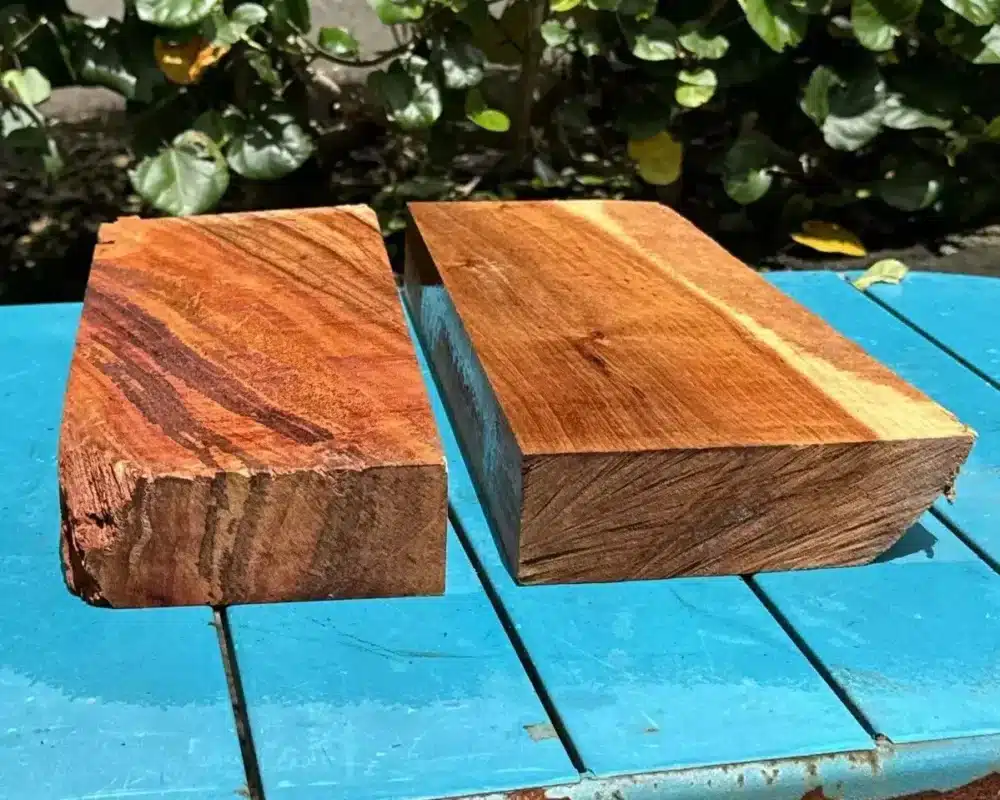
Acacia koa is the showpiece acacia: warm amber to reddish-brown, often with curl or a rippling “chatoyance” that flashes as you walk past it. It’s commonly used for furniture and instruments, and it’s priced like a scarce, high-demand hardwood—expect a real jump when the figure is heavy or when you need wide, clear boards. Species-level notes and hardness references are summarized well in Wood Database’s acacia overview.
Koa’s beauty comes with a trade-off: figured pieces can be brittle at thin edges, so I avoid ultra-thin profiles on table aprons and I pre-drill aggressively near corners to prevent small splits that only show up after finish hits.
Australian Blackwood
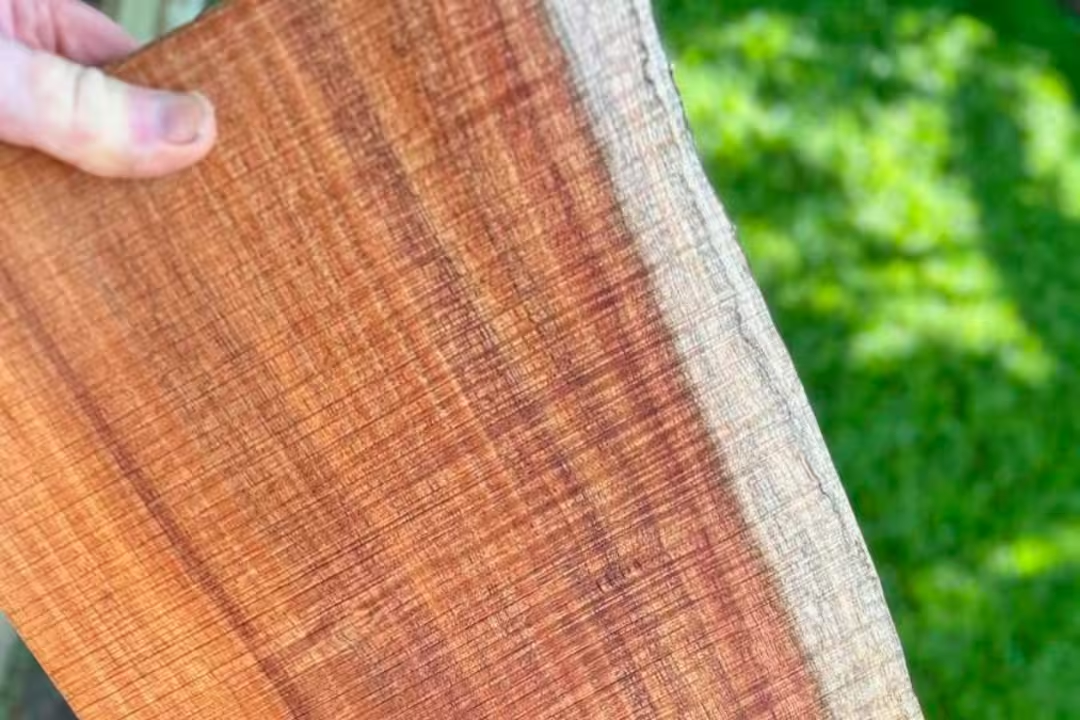
Australian Blackwood (Acacia melanoxylon) runs golden-brown through reddish tones and can show ribbon streaks that read “walnut-adjacent” from across the room. It’s popular in cabinetry and furniture because it finishes cleanly and feels smooth underhand after sanding—almost a dry, silky glide compared with oily woods.
Interlocked grain is the usual snag: a board can look straight, then reverse grain mid-length and tear out during planing. A high-angle plane iron, a sharp helical head, or a light climb-cut on a router table can save hours of patching and re-sanding.
Raspberry jam wattle
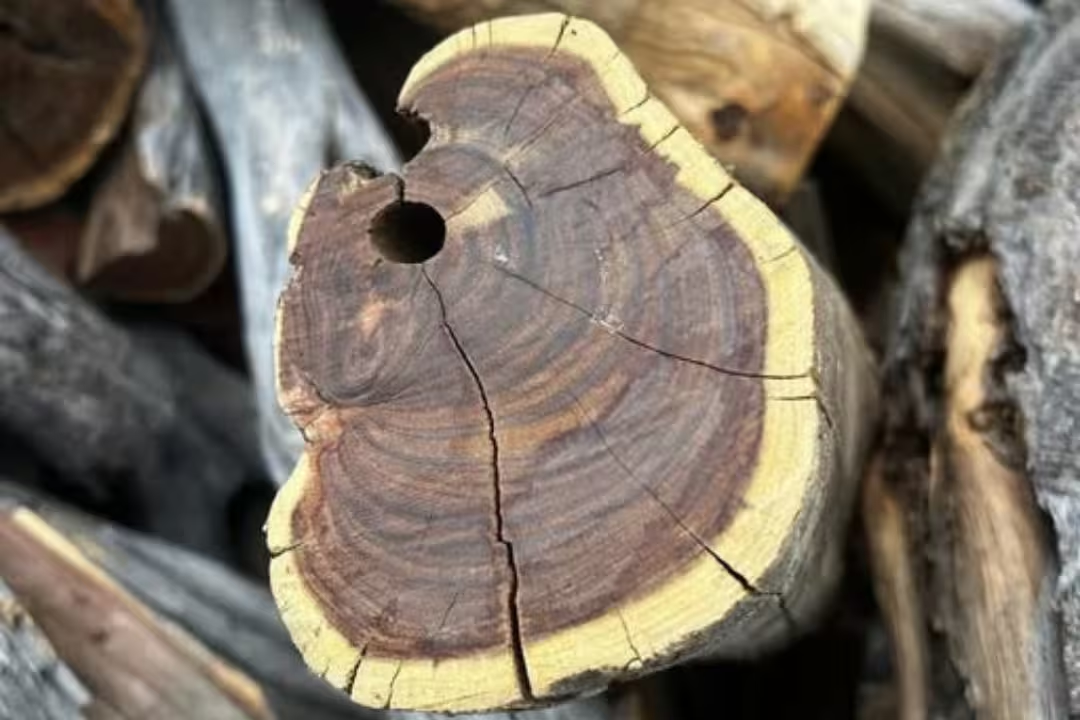
Raspberry jam wattle (Acacia acuminata) is famous for its scent when worked—fresh shavings really can smell like sweet jam—and for being extremely hard (often cited around 3,100 Janka in reference lists). That hardness makes it excellent for high-wear small items (mallets, handles, pegs), yet it can punish tooling: carbide stays sharp longer, and HSS edges need more frequent touch-ups.
Beginners often push feed rates too hard on dense acacia and get burn marks that look like dark stains but won’t sand out evenly. The fix is slower passes, cleaner cutters, and a quick wipe with mineral spirits to reveal whether it’s true discoloration or just surface scorching before you commit to aggressive sanding.
Earpod wattle
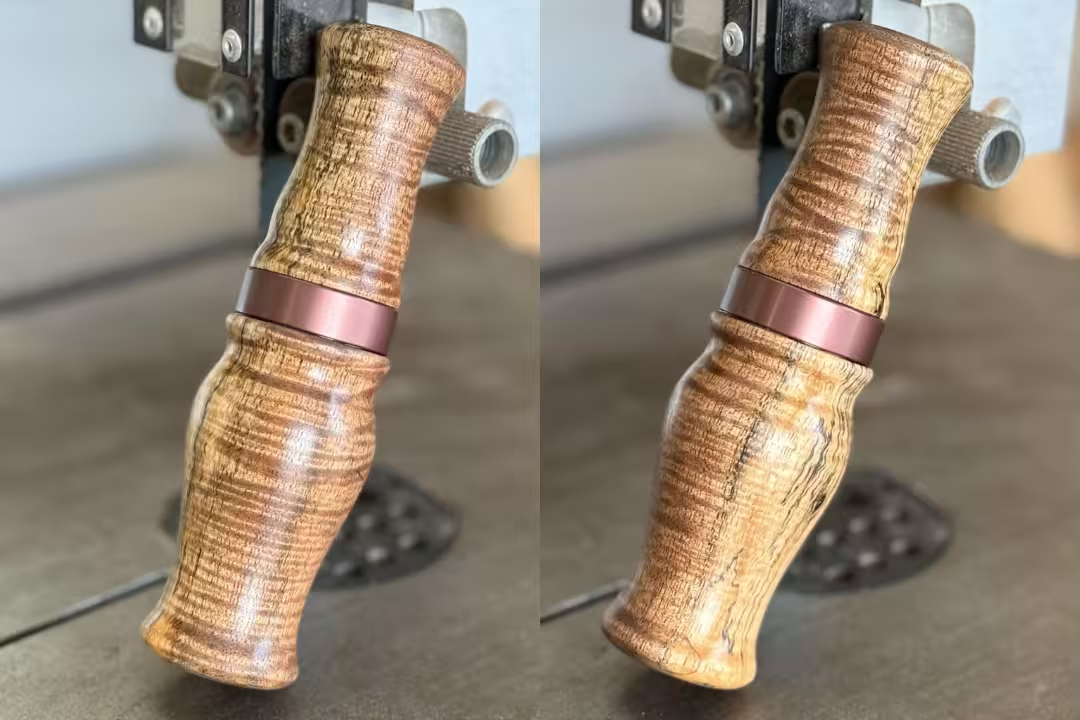
Earpod wattle (Acacia auriculiformis) lands in a middle zone: strong enough for utility furniture and panels, usually easier than the hardest acacias, with a look that can swing from medium brown to darker, depending on the tree and cut. It’s a common candidate for wider commercial products where consistent supply matters more than rare figure.
Watch for variable density inside one board—some pieces machine like typical hardwood, others feel waxy under the sander and load paper faster. I keep a crepe cleaning block nearby and switch grits sooner so I’m cutting, not polishing resin into the surface.
Acacia mangium
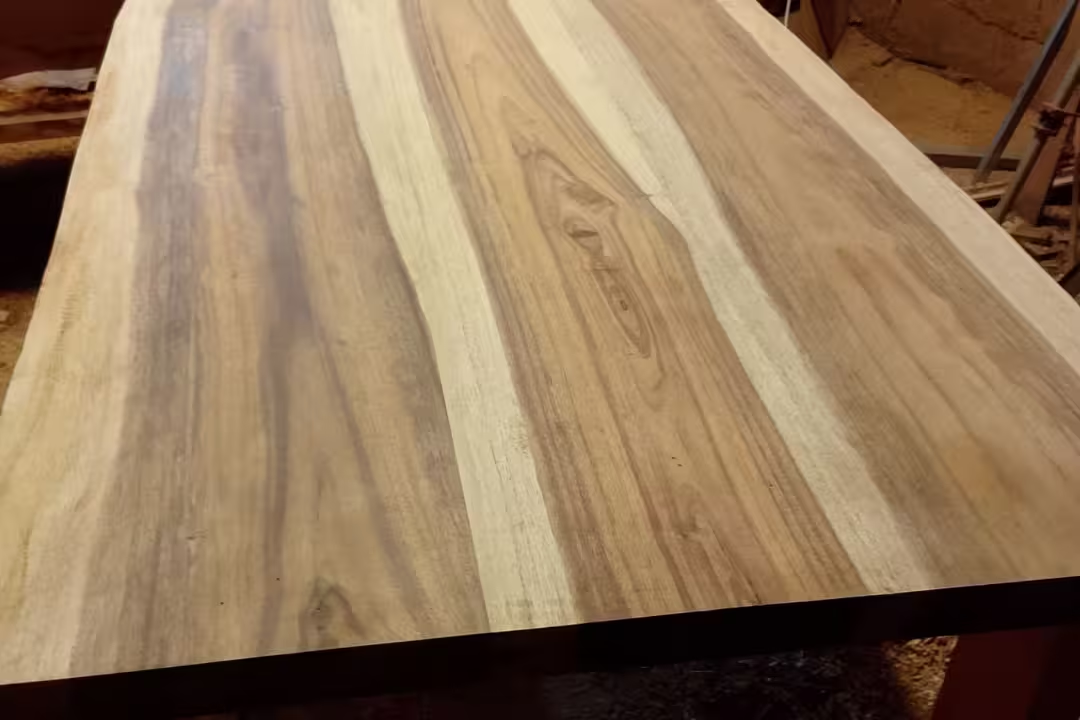
Acacia mangium is widely planted and often shows up in budget-friendly acacia furniture, panels, and cutting boards because it grows fast and supplies scale. The look tends to be honey-brown with subtle shimmer, and movement is usually manageable if it’s dried correctly and sealed on all faces—big “if” on inexpensive imports, where moisture equalization can be rushed.
If you’re matching parts, sort boards under the same light you’ll install them in; mangium can shift from warm gold to slightly greenish-brown depending on finish and lighting. That mismatch is one of the most common “why doesn’t it match?” complaints I see with multi-board tops.
Stinking wattle
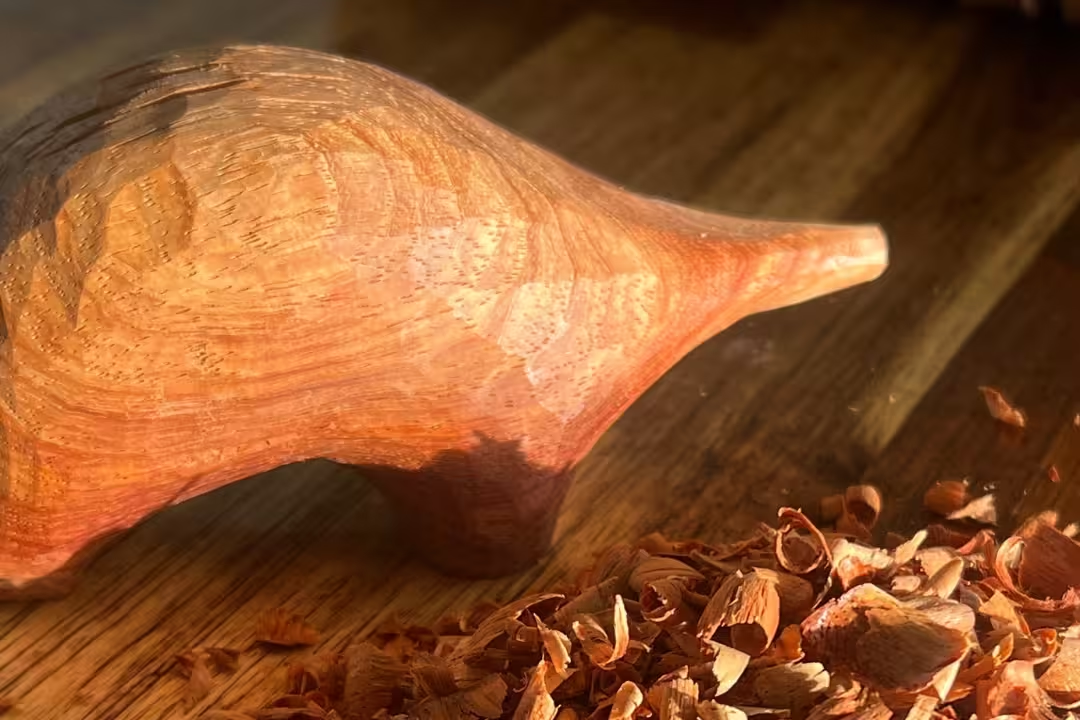
Stinking wattle (Acacia cambagei) is known more for its strong odor in some parts of the tree than for mainstream lumber sales, yet it’s a useful reminder that “acacia” includes everything from premium furniture stock to niche, intensely scented timbers. When you hit a board with a saw and the smell is sharp and lingering, run dust collection and wear a respirator—odor often travels with fine dust that irritates throats.
Because supply is less standardized, I treat any unknown “wattle” board like a test piece: plane a sample, wipe with solvent, and run a small finish schedule first so surprises happen on scrap, not on a tabletop.
Waddywood
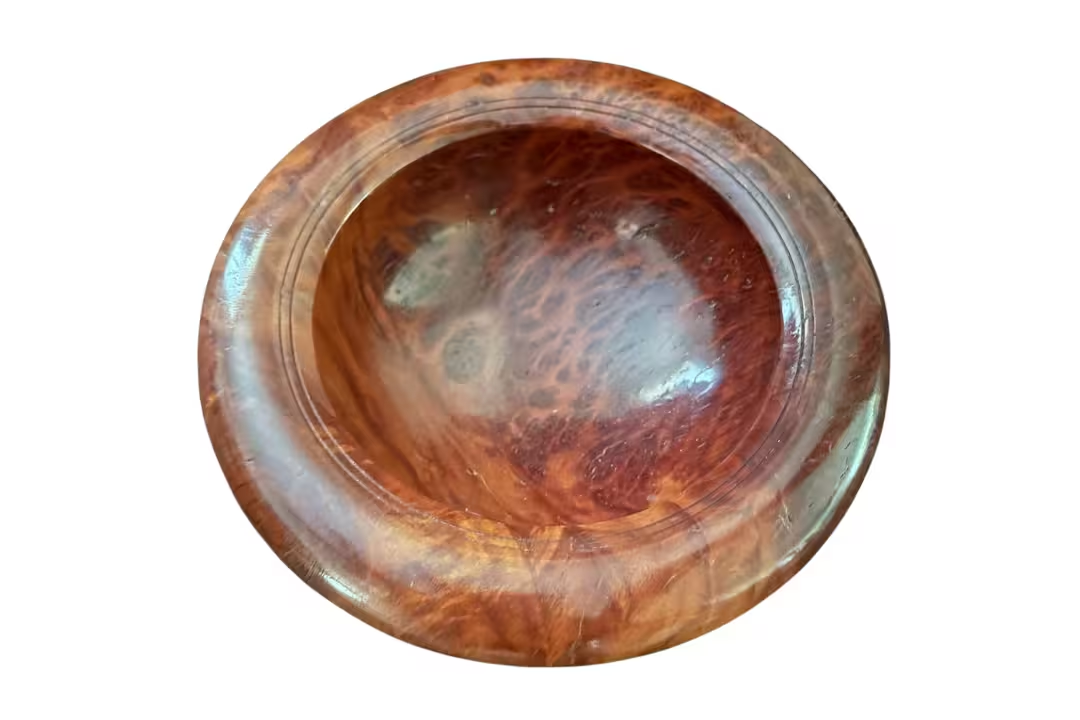
Waddywood (Acacia peuce) is one of the densest acacias you’ll run into, often deep brown with darker streaking and a very fine, uniform feel when sanded. In the hand, it has that “heavy for its size” sensation—small blanks feel like they’ve got a metal core—and it’s excellent for turning, tool handles, and parts that must resist dents.
The downside is machining friction: drill bits heat up quickly, and you can glaze holes so glue bonds weaken. I back out bits often, clear chips, and lightly scuff inside holes before glue-up to restore a clean bond surface.
Taiwan Acacia (Acacia Confusa)
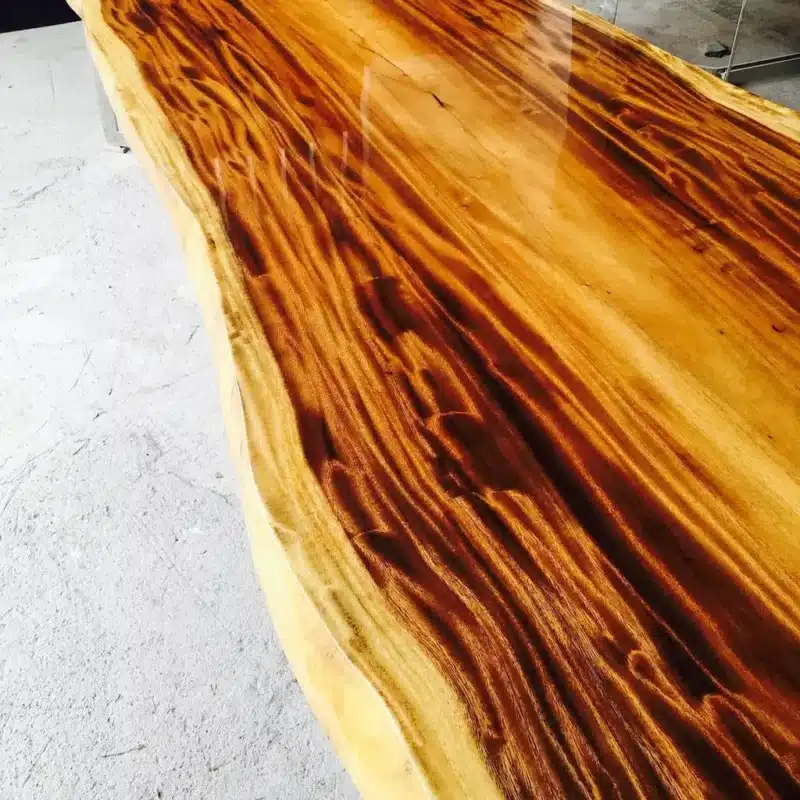
Also known as acacia confusa, this wood is a dense hardwood found mainly in Asia. It’s praised for being strong and long-lasting, perfect for furniture and decorations. It’s also very tough against wear, water, and mold because of its density.
Other notable types
Several other wattles show up in specialty uses, tannin production, landscaping, or regional lumber markets, and they still get sold under the acacia umbrella. Lists like Types of Acacia Wood are helpful for cross-checking common names with Latin names before you buy.
If you’re buying online and the listing doesn’t name the species, ask for an end-grain photo and the country of harvest. That one extra step prevents the classic mistake of expecting “teak-like outdoor performance” from a species that looks similar but lacks the same natural durability in exposed conditions.
Acacia wood properties and characteristics
Color and figure
Color variation is the headline feature: acacia can swing from light honey to deep chocolate, sometimes with orange, red, or yellow flashes. Flatsawn boards often show bold cathedral patterns; quartersawn or riftsawn boards can show straighter striping that reads cleaner in modern interiors. If you’re still learning how figure reads after finishing, compare with our guide to colors of wood.
One real-world catch: acacia can “pop” dramatically under oil, which is great until two adjacent boards pop differently and your seam becomes obvious. I’ll often test a tiny patch with the intended finish on every board and then decide whether to use a light dye to unify tone before the clear coats.
Grain and pores
Most acacias are diffuse-porous hardwoods, meaning the pores are more evenly sized across growth rings compared with ring-porous woods like oak. In practice, you get an “open” look without the deep, trench-like earlywood pores that demand heavy grain filling.
Grain direction can be straight, wavy, or interlocked, and interlock is where planers and jointers can leave torn patches that feel like rough suede when you rub across them. If you want a quick refresher on how grain direction affects machining and finishing, our wood grain pattern breakdown pairs well with acacia selection.
Janka hardness range
Hardness is where “acacia” gets misleading: depending on species, it can be moderately hard or extremely hard. That impacts dent resistance for floors, knife marks on boards, and how quickly your tools dull.
| Acacia type (common) | Typical Janka hardness (lbf) | What that feels like in use |
|---|---|---|
| Australian Blackwood (A. melanoxylon) | ~1,160 | Comfortable to work; decent dent resistance for furniture. |
| Koa (A. koa) | ~1,790 | Tougher under tools; holds detail well; great for show surfaces. |
| Earpod wattle (A. auriculiformis) | ~1,710 | Solid all-rounder; can vary board to board. |
| Raspberry jam wattle (A. acuminata) | ~3,100 | Very dent-resistant; machining is slow; dulls edges fast. |
If you want to compare acacia against other hardwoods you already know, use our wood hardness scale guide as a reference point before you commit to flooring or a daily-use countertop.
Durability traits
Durability is usually good, but it’s not uniform across all acacias. Heartwood tends to resist moisture and wear better than sapwood, and tight, well-finished surfaces resist grime because less gunk can lodge in pores and checks.
A common beginner mistake is treating acacia like a “set-and-forget” outdoor timber. Some species hold up well outside, yet others will crack, gray quickly, or take on black mildew freckles if the finish film fails and water sits. If your project lives outdoors, cross-check build choices with our best wood for outdoor furniture guide before selecting an acacia species by looks alone.
Identification clues
Identification is hard from a single photo, but a few clues help: acacia often has high contrast between heartwood and sapwood, frequent wavy or ribbon grain, and a “busy” look with occasional knots. Under shop light after a fresh cut, some pieces show a mild shimmer that tracks with interlocked grain.
If you’re sorting boards on site, bring a small blacklight; acacia is often reported as fluorescing under UV in reference descriptions, which can help you flag “maybe acacia” versus “definitely not” when a dealer has mixed stacks. Treat UV as a hint, not proof—finishes, dirt, and other species can fool you.

Acacia 8-Piece Cooking Set
- Durable acacia construction built to last
- Gentle on nonstick cookware and safe for daily use
- Smooth, sanded finish resists sticking and splintering
- Includes spatula, turner, spoons and more for versatile cooking
- Lightweight ergonomic handles for comfortable stirring and serving
 Buy on Amazon
Acacia woodworking performance
Workability challenges
Acacia woodworking ranges from pleasant to punishing depending on species and grain. Dense acacias cut with a crisp “tack” sound on the saw and leave heavier shavings; that’s satisfying, but it also means mistakes cost more effort to fix.
The biggest surprise for new woodworkers is movement from poorly dried stock. When I bring acacia into the shop, I let it acclimate stickered for several days, then take light milling passes and wait again before final thicknessing. Rushing that step is how you end up with a panel that was flat yesterday and feels like a shallow potato chip today.
Tooling and tear-out
Tear-out is the main enemy on interlocked grain species like blackwood: a jointer can leave little divots that only appear when finish reflects light across the surface. A sharp cutterhead helps, yet technique matters more—lighter passes, correct grain orientation, and skew cuts reduce the risk.
On very hard acacias, heat becomes the hidden problem. Router bits can burn edges, and burns can telegraph through clear finish as muddy shadows. A pro workaround is to take a final “clean-up” pass that’s extremely light (almost polishing), then scrape lightly with a card scraper to remove any heat-darkened fibers without rounding over crisp profiles.
Finishing and stains
Finishing acacia is usually rewarding: oil brings depth, and film finishes can look glassy because the figure reflects in bands. The pitfall is blotch or uneven absorption where sapwood meets heartwood, or where density changes within a single board.
I like a thin seal coat (dewaxed shellac or a compatible sanding sealer) when I need predictable color, then I build the topcoat. If you skip the seal coat and go straight to stain, acacia can take pigment unevenly and you’ll chase it with extra coats that make the surface look artificially dark.
Turning and engraving
Turning acacia can be a joy once tools are sharp: the cut feels firm, and the surface can come off the gouge nearly burnished. Dense types like waddywood hold crisp beads and details well, which is why you’ll see them used for handles and small precision parts.
Engraving and laser work depend heavily on color and extractives. Darker heartwood can hide fine engraving lines, while lighter sapwood burns faster and can char at the edges. Do a small test grid of speed/power settings on offcuts; it’s the fastest way to avoid a smoky, bitter smell and scorched outlines on a finished piece.
Acacia wood furniture
Best species choices
Acacia wood furniture works best when the species matches the job: koa for statement surfaces, blackwood for cabinetry and refined tables, and mangium for cost-controlled pieces where you still want a hardwood feel. If you’re comparing wood options across a whole home, our types of wood for furniture guide helps you map acacia against walnut, oak, teak, and other staples.
One trade-off shows up in chair legs and thin rails: some acacias are strong, yet interlocked grain can make narrow parts more likely to warp if the grain runs off the edge. I pick straight-grained stock for structural parts and reserve the wild figure for panels and tops.
Solid vs veneer
Solid acacia tops can be thick, heavy, and easy to refinish, while veneer acacia gives the look with better stability and lower cost. Veneer becomes the smarter choice for wide tabletops in dry climates with big seasonal humidity swings, because it reduces the chance of end-joint cracks opening.
The common mistake is sanding veneer like it’s solid wood. Acacia veneer can be thin, and once you burn through the face, the repair almost always shows. If you’re restoring a piece and you’re unsure, sand by hand with very light pressure at edges and corners, and stop as soon as the surface feels uniformly smooth.
Durability and care
Care is simple: use coasters, wipe spills fast, and keep indoor humidity reasonably steady. Acacia can feel dry and slightly textured when the finish wears thin; running your fingertips across the grain is often the first sign you need a maintenance coat, long before the surface looks “bad.”
A frequent failure mode in cheaper acacia furniture is a finish that’s thin on the underside. Moisture enters from below, the top stays sealed, and the panel cups. The fix is boring but effective: seal the underside and edges too, even if it’s just a couple wipe-on coats, so moisture exchange stays balanced.
Acacia wood cutting board
Why acacia works
An acacia wood cutting board works because many acacias are hard enough to resist deep gouges, yet they still have a bit of give under the knife compared with glass or stone. On a good board, the knife sound is a muted “thock,” and the surface feels slightly warm and grippy rather than slick, which helps control wet ingredients.
Water resistance gets overstated online. Acacia holds up well to rinsing, yet it’s still wood: standing water near seams can raise grain or darken sapwood. If you want to compare acacia with maple, walnut, and other proven board woods, use our best wood for cutting board guide for practical trade-offs.
Species and weight
Species affects day-to-day feel. Lighter acacias (often plantation mangium) make boards easier to lift and wash, while denser types feel glued to the counter and stay put while chopping—great until you need to move them to scrub the sink.
If you buy an acacia board with strong sapwood/heartwood contrast, treat it like a premium board and oil it early; pale sapwood shows gray water marks faster. That’s the usual “my board looks dirty” complaint, even when it’s clean—discoloration is inside the fibers, not on the surface.
Food-safe finishes
Food-safe finishes for acacia boards are simple: a penetrating mineral oil base, often topped with a wax blend for feel. After the first coat, the surface darkens and the grain pops, and you can feel a subtle drag under a dry paper towel—an easy tactile check that oil has actually soaked in rather than sitting on top.
Avoid household cooking oils (olive, canola) because they can oxidize and smell off over time, especially in warm kitchens. If a board already has that stale, sticky feel, scrub with hot water and mild soap, let it dry fully, then recondition with board oil in several thin passes.
Cleaning and maintenance
Maintenance is where most boards fail: dishwashers, soaking, and storing boards flat while wet. Heat and water drive warping, and acacia can cup quickly if one face dries faster than the other.
- Wash quickly with mild soap, rinse, and wipe dry.
- Stand the board on edge so both faces dry evenly.
- Re-oil when the surface looks dull or feels dry under your palm.
- If it picks up odor, rub with coarse salt and lemon, then rinse and dry fully.

3-Piece Acacia Cutting Board Set
- Three useful sizes to handle prep and serving needs
- Built-in juice groove helps contain liquids and prevent messes
- Durable acacia resists knife marks and everyday wear
- Reversible boards offer extra workspace and versatility
- Smooth finish makes them attractive for serving cheese and charcuterie
Buy on Amazon
Acacia wood flooring
Look and variation
Acacia wood flooring is chosen for character: high color variation, dramatic striping, and frequent knotty features that hide everyday crumbs and scuffs better than uniform floors. If you want a deeper species-specific flooring view, start with our acacia wood flooring article and compare visuals room by room.
That same variation creates an installation surprise: two cartons can look like different products once spread out. The workaround is to open multiple boxes and blend boards across the room, so you don’t end up with a dark “island” in one corner and a light band down the hallway.
Wear performance
Wear depends on species, finish system, and whether it’s solid or engineered. Harder acacias resist dents better, yet they can still scratch if grit gets under shoes—hardwood hardness doesn’t beat sandpaper on the bottom of a sneaker.
Beginners often blame the wood when the real culprit is entryway grit. A pro-level fix is boring but effective: put a large mat outside, a second mat inside, and vacuum those zones often. That single habit reduces micro-scratches that make satin floors look hazy under angled sunlight.
Moisture considerations
Moisture is the make-or-break factor with acacia flooring. Many products sold as “acacia” are engineered planks with an acacia wear layer; that construction can help stability, yet only if the subfloor moisture is controlled and the planks are acclimated properly.
Bathrooms, laundry rooms, and slab-on-grade installs are where people get burned. If you can’t keep indoor humidity stable or you have a history of damp slabs, pick a flooring system rated for that condition and treat acacia as a look layer, not a promise of waterproof performance.
Finishing and upkeep
Upkeep is mostly finish care: dry mop, vacuum with a soft head, and use a cleaner meant for the finish type (oil vs polyurethane). Acacia’s color can deepen over time; rugs and furniture can leave “tan lines,” which is normal oxidation rather than a stain.
If you refinish, watch edges and bevels—acacia’s contrast can make sanding dips stand out. I mark problem boards with chalk before sanding so I don’t chase the same low spot until the bevel disappears.
Sourcing, sustainability, and pricing
Plantation vs wild
Plantation acacia (often mangium and related types) can be a smart choice because rotation is fast and supply is scalable, which reduces pressure on slower-growing forests. Wild or limited-range acacias (like premium koa) can be far more sensitive from a sourcing standpoint, and paperwork matters more if you’re trying to buy responsibly.
Don’t assume “acacia” automatically equals eco-friendly. Ask whether it’s plantation-grown, whether the supplier can state origin, and whether the product is solid wood or a mixed-material build that complicates end-of-life reuse.
Typical price ranges
Pricing swings widely by species, figure, width, and dryness. As a practical expectation: koa sits at the premium end (often quoted in specialty markets around $50–$100+ per board foot for select figured stock), while plantation mangium commonly appears in the budget tier (often cited around $3–$5 per board foot for commodity boards), with blackwood typically between those extremes depending on grade.
When a deal looks too good, it’s often one of three things: thin veneer marketed as “solid,” wet lumber that will move after you build, or boards with heavy sapwood that won’t wear like the photos. Pay for Moisture content data when possible; it’s cheaper than rebuilding a warped top.
Supply chain changes
Supply changed in the early 2020s: freight costs rose, lead times stretched, and some sellers substituted species while keeping the same “acacia” label. If you’ve ever opened two orders months apart and wondered why the color and density don’t match, that’s usually the reason.
Best workaround: when matching an existing project, buy extra material from the same batch, or ask the supplier to confirm species and provide fresh photos of current stock. A written confirmation is useful if you’re building built-ins and need additional boards later.
Common failure modes
Failures with acacia are usually preventable. Most issues come from moisture imbalance (cupping and checking), weak finishes on sapwood (dark staining), or machining tear-out that only shows after clear coat.
- Cupping: underside left raw while the top is sealed; fix by sealing all faces and controlling humidity.
- End checks: lumber dried too fast; fix by trimming ends back and sealing end grain early (wax/emulsion).
- Blotchy color: stain applied directly to variable-density wood; fix with a seal coat or dye-first schedule.
- Glue issues: polished/burned joints in very dense species; fix by scuffing joints and avoiding overheated drilling/routing.
Lessons Learned in Practice
Acacia rewards patience more than most people expect. The first time I flattened a wide acacia slab, it felt stable right off the planer, then picked up a subtle twist overnight—just enough that a glass rocked on the surface. Letting acacia rest between milling steps (and taking lighter final passes) solved it; skipping that rest step brought the problem right back.
Tool sharpness shows up fast. With dense species, you can feel the cut change: the router starts sounding higher-pitched, the feed feels hotter through the workpiece, and edges come off slightly burnished instead of crisp. I keep a “no-ego” rule—swap to a fresh bit or touch up blades early—because trying to push through with dull tooling creates burn marks that take longer to remove than the bit change would’ve taken.
Finishing surprises people on day two, not day one. Acacia can look perfect right after the last coat, then the next morning you catch a low-angle window reflection and see torn grain you missed. My workaround is to do a bright raking-light inspection after the sanding sealer stage; it highlights trouble before the final coats lock it in.
Sapwood is the quiet troublemaker in kitchens and baths. On cutting boards and vanities, sapwood sections can take on a gray cast if they’re under-oiled or if water sits at seams. The fix is consistent conditioning and careful drying on edge; storing a damp board flat is the fastest way to get that musty smell and a slight raised texture you can feel with your fingertips.
FAQs
What Is Acacia Wood And Is It A Hardwood?
Yes, acacia is a hardwood known for its dense, durable grain.
It has tight growth rings and natural oils that give it strength and good resistance to wear and moisture. You’ll commonly find it used in furniture, flooring, and kitchen items because it balances hardness and aesthetic appeal.
What Are The Main Types Of Acacia Wood For Furniture?
Common acacia types used for furniture include Acacia mangium, Acacia koa, and Australian blackwood.
Each species varies in color, grain, and hardness, so some are better for indoor furniture while others suit decorative pieces or outdoor use after proper finishing. Check species-specific characteristics and finishes before choosing wood for a project.
Is An Acacia Wood Cutting Board Safe And Durable?
Yes, acacia cutting boards are generally safe and durable when properly finished and maintained.
Their dense grain and natural oils resist scratches and stains, but regular seasoning with food-safe mineral oil and hand-washing are required to prevent warping and bacterial growth. Avoid soaking or using a dishwasher to prolong board life.
How Hard Is Acacia Wood Compared To Teak Or Walnut?
Acacia is typically harder than walnut and can be similar in hardness to teak, though exact hardness varies by species.
On the Janka scale many acacia species rate higher than walnut and close to teak, giving good dent and wear resistance; however teak’s higher natural oil content often makes it superior for outdoor durability.
Is Acacia Wood Good For Flooring In Humid Climates?
Acacia can be a good flooring choice in humid climates if it is properly sealed and installed with acclimation.
Its density and natural oils give it decent moisture resistance, but solid planks can still move; consider engineered acacia or strict humidity control and correct installation to minimize cupping and gaps.