
Cherry Wood Guide: Properties, Uses, Finishing, and Buying Tips

Cherry wood is a domestic hardwood (most commonly American black cherry) prized for its smooth, fine grain and a heartwood color that deepens from pinkish brown to a richer reddish brown with light exposure. It’s a favorite for furniture, cabinets, and low-traffic flooring because it machines cleanly and finishes beautifully, but it dents easier than harder woods and can blotch under stain without the right prep.
Table of Contents
Cherry wood overview and identification
Species and names
In most North American lumberyards, cherry wood means American black cherry (Prunus serotina). You’ll also see “American cherry” used as a trade name—sometimes it’s the same wood, and sometimes it’s a cue to ask the supplier for the exact species and origin, because “cherry” can get mixed up with fruitwood cherry or imported lookalikes in small craft packs.
If you want a quick cross-check, compare the board’s look and typical use cases with our internal guide to black cherry wood—it’ll help you confirm you’re buying the furniture-grade species people usually mean. For species-level reference, the American Hardwood Export Council overview on American Cherry aligns with what I see in shops: fine grain, warm color, and a reputation for clean machining.
Heartwood vs sapwood
The fastest way to ID cherry on a fresh planed face is the color split: heartwood trends pinkish to reddish brown, while sapwood can run creamy white to pale yellow. That contrast is normal, but it catches beginners off guard when they build a panel and suddenly have bright sap streaks after sanding—especially if the board looked “even” under rough-sawn oxidation.
A common buying mistake is assuming “select” boards mean “no sapwood.” Many mills allow small sap streaks in higher grades, so if you’re building a show face (cabinet doors, table tops), sort in good light and flip boards to check both faces and edges. If you’re okay with sapwood as a design detail, plan where it’ll land so it looks intentional instead of random.
Grain and figure
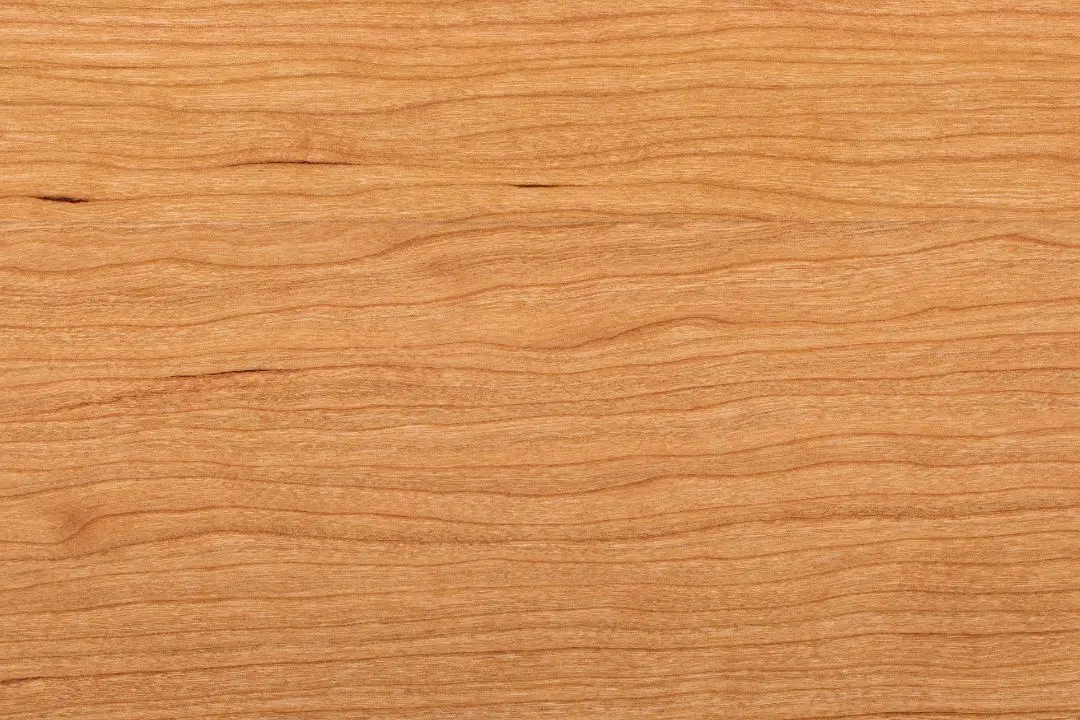
Cherry has a fine, closed grain that can look “silky” after a sharp plane or card scraper—almost like the surface is lightly burnished. Look for subtle curly areas, small pin knots, occasional gum pockets, and the classic tiny dark “pith flecks” that show up as short brown marks; they’re normal character, not a defect, but they can telegraph through some clear finishes.
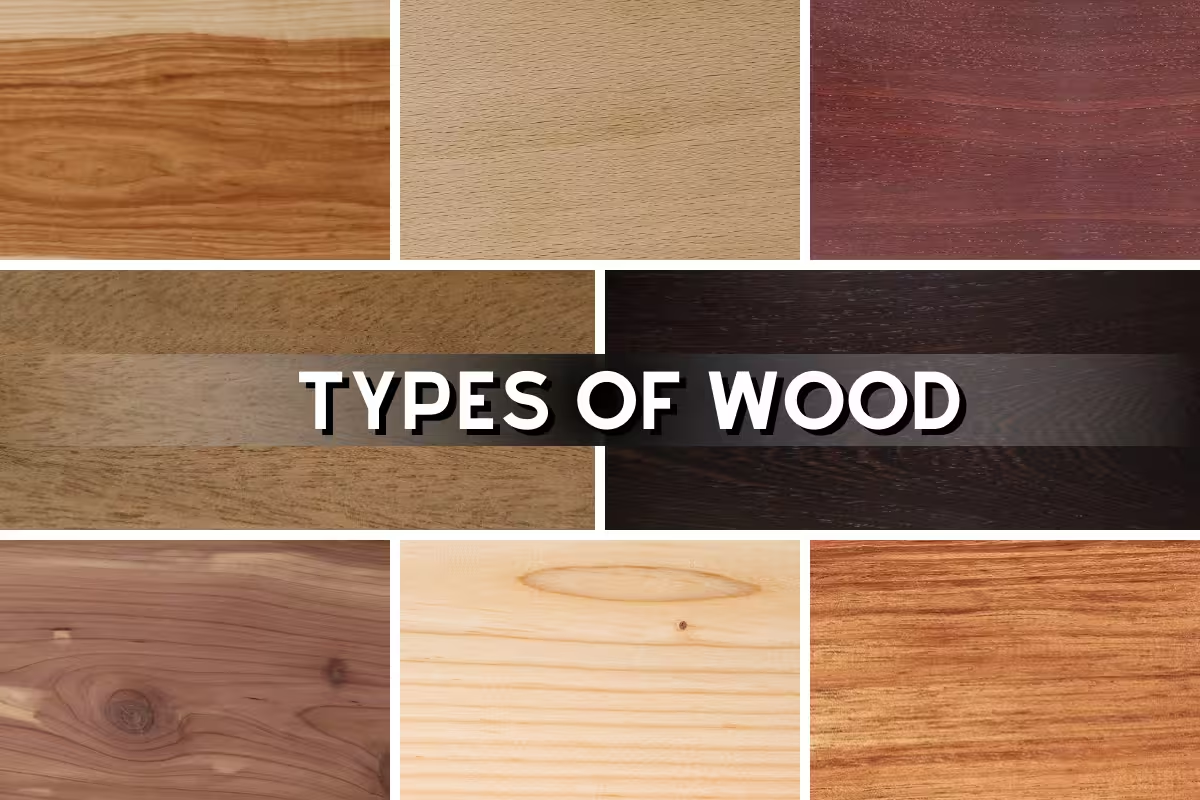
Because grain cues matter when you’re trying to match boards, it helps to review what different figure types look like in our wood grain pattern guide. In real builds, the trick is to rough-arrange your panel, spritz with mineral spirits, and step back—cherry can “flip” from calm to bold depending on viewing angle and light.
Cherry wood properties and specs
Cherry lands in a sweet spot: medium hardness, moderate weight, and good stability once properly dried. That’s why it’s friendly for furniture and cabinetry, yet still prone to dents if you treat it like hard maple or white oak.
| Property | Typical value for American cherry |
|---|---|
| Janka hardness | 950–995 lbf (some sellers list ~660 lbf for specific stock) |
| Specific gravity (12% MC) | ~0.50 |
| Average dried weight (12% MC) | ~561 kg/m³ |
| Volumetric shrinkage | ~9.2% |
| Modulus of rupture (MOR) | ~84.81 MPa |
| Modulus of elasticity (MOE) | ~10,274 MPa |
| Compressive strength (parallel) | ~49 MPa |
Those “spec sheet” numbers are a solid baseline, but don’t treat them like a promise—real boards vary by growing conditions, cut, moisture content, and even how much earlywood/latewood shows up. If you want context for what Janka means in daily use (chair legs, floors, denting), our wood hardness scale primer helps you translate ratings into expectations.
Janka hardness range
Most reputable references put cherry around 950–995 lbf, which makes it clearly softer than oak or hard maple, and noticeably easier to dent with a dropped tool. You’ll also run into lower figures (like ~660 lbf) cited by some suppliers; that mismatch usually comes down to different test references, stock variation, or simple catalog inconsistency—so use Janka as a comparative guide, not a single “truth number.”
On a workbench, the difference feels real: clamp pads can leave faint compression shadows if you crank pressure, and a steel rule sliding under grit can scratch the surface before finish. A pro workaround is to keep a sacrificial “cherry caul” piece for clamping so any dents blend with the project, and to do final surface prep after glue-up so you erase handling marks.
Density and weight
Cherry’s moderate density makes it pleasant to handle in casework and solid furniture: it feels substantial in your hands without the “lugging” fatigue you get with heavier exotics. That weight also helps doors and drawers feel premium, but you still want good joinery because cherry is stiff enough to span, yet not so stiff that it forgives sloppy racking loads.
If you’re planning wide panels, weight ties back to hardware choices: soft-close hinges and drawer slides rated for real loads matter more than people think. For a quick reference point on how density shifts performance across species, bookmark our density of wood guide.
Shrinkage and stability
Cherry’s shrinkage behavior is one reason it stays popular: it tends to behave predictably once it’s properly dried and acclimated. In real rooms, it moves with seasons like any hardwood, but it’s less “dramatic” than ring-porous woods that can telegraph grain and movement more aggressively.
The beginner mistake is rushing acclimation or building to final dimension right off the truck. Give boards time in the shop environment, then mill in stages (rough mill, rest, final mill) so internal stresses show themselves before you cut joinery—this prevents the classic cherry panel that cups the moment you rip it.
Strength and stiffness
Cherry has medium strength and relatively low stiffness compared with harder flooring species, which is why it excels in furniture and cabinets but can feel “soft” underfoot in a busy hallway. It takes shock well, so it’s great for parts that get bumped (table aprons, chair rails), yet thin shelves still need appropriate thickness or a front edge to reduce sag.
Where cherry surprises people is edge durability: crisp profiles rout nicely, but sharp edges can bruise if the piece gets knocked during install. I’ll usually ease edges very slightly (even on “square” modern work) because that tiny break reduces dent visibility and makes the finish wear more evenly.
Cherry wood color and aging
Cherry’s color change is part of the appeal and part of the hassle: it darkens with light exposure, and it doesn’t do it evenly if you block sunlight with rugs, tape, or decor. If you plan for that from day one, you get a warm, even patina instead of “tan lines.”
Natural color range
Freshly surfaced cherry heartwood often starts light—think salmon-pink to light reddish brown—then it shifts deeper with time and light. Sapwood stays much lighter, so a mixed-heart board can look two-toned even under clear finish, which is why high-end cabinet shops either embrace sapwood as character or manage it through board selection and color work.
If you’re choosing a finish to coordinate with other species in your home, it helps to compare cherry to other palettes in our colors of wood reference. In practice, cherry’s “red” reads warmer under incandescent and calmer under daylight LEDs, so test samples under the bulbs you actually use.
UV darkening speed
Cherry can darken within weeks in strong light, and you’ll notice it fastest on freshly milled surfaces: that first “pop” happens quickly, then the change slows as it matures. If you’ve ever peeled painter’s tape after a few days and seen a lighter stripe, that’s cherry doing what it does.
That speed creates a finishing trap: you stain a sample today, approve it, then install the project and it shifts a shade or two after it sits by a window. To avoid surprises, I’ll leave test boards near the intended light source for several days before locking in a color schedule.
Managing sun exposure
Managing cherry is about even exposure: rotate rugs, move decor, and don’t leave cardboard or drop cloths on a new floor for long stretches. The worst offender is a long runner in a bright hallway—six months later you lift it and see a clean “shadow” line that takes a long time to blend back.
If you’re installing cherry wood furniture near big windows, consider UV-filtering film or curtains during the first couple months so the whole piece tones in more uniformly. That’s a lot easier than trying to spot-tone mismatched panels after the fact, which often looks muddy.
Workability and finishing cherry wood
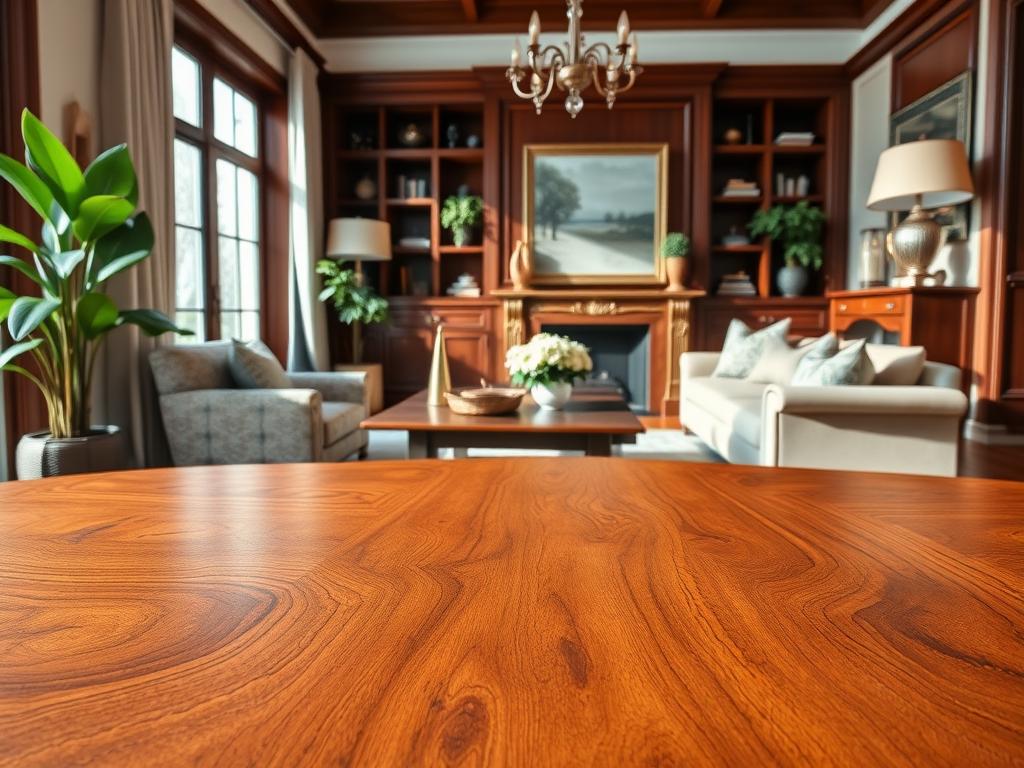
Cherry’s workability is a big reason I reach for it: it planes and scrapes cleanly, sands to a soft sheen, and takes clear coats beautifully. The catch is finishing—cherry can blotch under pigment stains, and sapwood matching takes planning.
Machining and sanding
With sharp cutters, cherry leaves a glassy surface off the plane, and that’s where beginners get fooled: the board feels perfect, so they skip a sanding plan and end up with uneven stain or finish adhesion issues in spots with burnishing. Cherry can also burn on router bits and table saw blades if feed rate is too slow—those heat marks can show through clear coats like faint smoke.
My reliable workflow is to use a card scraper after machining, then sand evenly (often stopping around 180–220 grit for most film finishes). Going too fine can reduce stain penetration and make blotching worse; going too coarse can make end grain drink finish and turn darker at joints.
Glue and fasteners
Cherry bonds well with common wood glues, and it holds screws reliably, but watch for gum pockets in some boards—those areas can interfere with glue wetting and finishing. If you hit one while jointing, you’ll often smell a slightly sweet, resinous note and see a darker, tacky streak.
Pre-drilling matters for smaller parts and near edges; cherry can split if you drive a screw too aggressively. A field trick that saves faces is to wax screw threads lightly so the screw cuts in without tearing fibers—especially on brass screws, which snap easier than people expect.
Steam bending notes
Cherry can steam-bend, but it’s not foolproof: straight-grained stock bends far better than figured wood, and runout will punish you with sudden fractures. When it fails, you’ll hear a sharp “tick” during the bend and see a tiny tension crack that grows as you clamp.
Use a compression strap when you can, and expect more springback than you’d get with some more bend-friendly species. If you only need a gentle curve, thin laminations glued over a form often look cleaner and waste less material than fighting thick steam bends.
Cherry wood stain basics
Cherry wood stain can look incredible, but the best results come from deciding your goal first: mimic aged cherry, match existing millwork, or keep it natural and let time do the coloring. In many homes, a simple clear oil/varnish blend or a waterborne clear coat keeps the look honest and avoids “fake cherry” darkness that can read flat.
If you must stain to match older pieces, build a sample schedule on offcuts from the same boards. Cherry shifts after finishing and after light exposure, so the “right” color today needs a little headroom so it doesn’t go too dark after a few months.
Preventing blotching
The classic cherry frustration is blotchy stain: pigment dives into uneven absorption zones and you get cloudy patches. This shows up worst on flatsawn faces with subtle density changes—after stain, the surface can look like someone dabbed it with a dirty sponge.
Workarounds that actually hold up: use a washcoat (thin dewaxed shellac is a common choice), then apply dye for color and use glaze only if needed for fine tuning. Gel stains can help because they sit more on the surface, but they can also mute cherry’s chatoyance; test both under your final topcoat before committing.
Sapwood color matching
Sapwood matching is where projects look “pro” or “patchy,” and it starts with board layout. If sapwood lands in the center of a door panel, you’ll see it forever; if it lands as a thin edge accent, it can read intentional and modern.
If the goal is uniform color, steaming at the mill often reduces sap/heart contrast, but you can’t count on it in random retail bundles. In-shop, you can tint sapwood with dye (in light passes) before your main schedule; avoid blasting it dark in one go, because sapwood can take color faster and end up looking like a bruise next to heartwood.
Black cherry wood vs sweet cherry
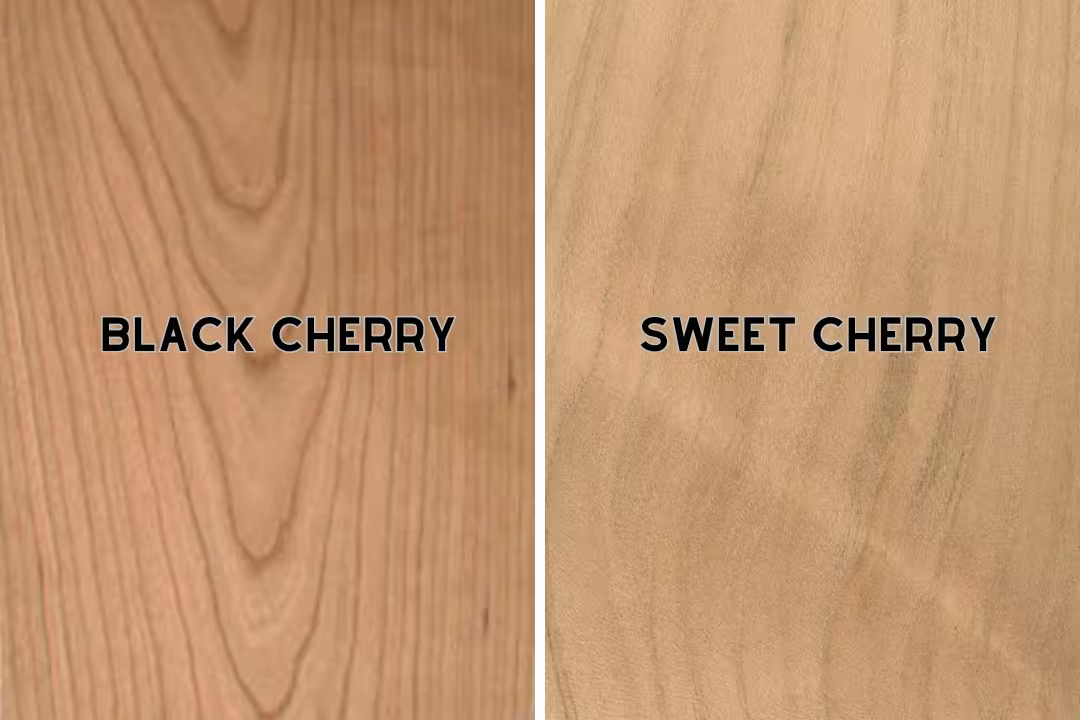
These get mixed up constantly: black cherry wood (Prunus serotina) is the standard “cherry” in American furniture lumber, while sweet cherry (Prunus avium) is more common as a fruit tree and shows up less often as a primary commercial lumber in the U.S. The name confusion matters because performance and sourcing expectations aren’t identical.
Prunus serotina basics
American black cherry typically offers the classic look people associate with cherry furniture: warm heartwood, fine grain, and a strong tendency to darken with light. If you’re comparing “cherry” from different suppliers, ask if it’s Prunus serotina and whether the boards were steamed—two details that change color expectations a lot.
For reference on the other side of the comparison, Wood Database’s Sweet Cherry profile is a helpful snapshot of how sweet cherry is presented in woodworking references (and why it’s treated differently in many shops).
Decay resistance differences
Cherry isn’t an outdoor deck wood, but black cherry heartwood has better natural durability than many people expect for interior hardwood use. It still won’t tolerate ground contact or repeated wetting; the risk is rot plus fast finish failure when water gets under a film coat.
If a client asks for “cherry” on a covered porch, the workaround is to steer them to a wood meant for exterior exposure, or to use cherry only if it’s fully protected and easy to maintain—then be honest that dents plus moisture are a rough combo. Indoor pieces near sinks and entryways also need a finish schedule that resists water rings.
Sourcing notes
Sourcing is where you’ll see the biggest day-to-day variation: some suppliers sell steamed cherry that looks more uniform (less sap contrast), while others push unsteamed boards with stronger color variation and more “natural character.” Neither is wrong; they just fit different design goals.
If you’re buying sight-unseen (online packs), expect more sapwood and shorter average lengths than you’d pick in person. For panel glue-ups, it’s smart to order extra so you can reject boards with big gum pockets, heavy mineral streaking, or color that won’t blend with your layout plan.
Common uses for cherry wood
Cherry shines where you want clean joinery, warm color, and a finish that looks deeper each year. It’s less happy where you need dent resistance or outdoor durability.
Cherry wood furniture
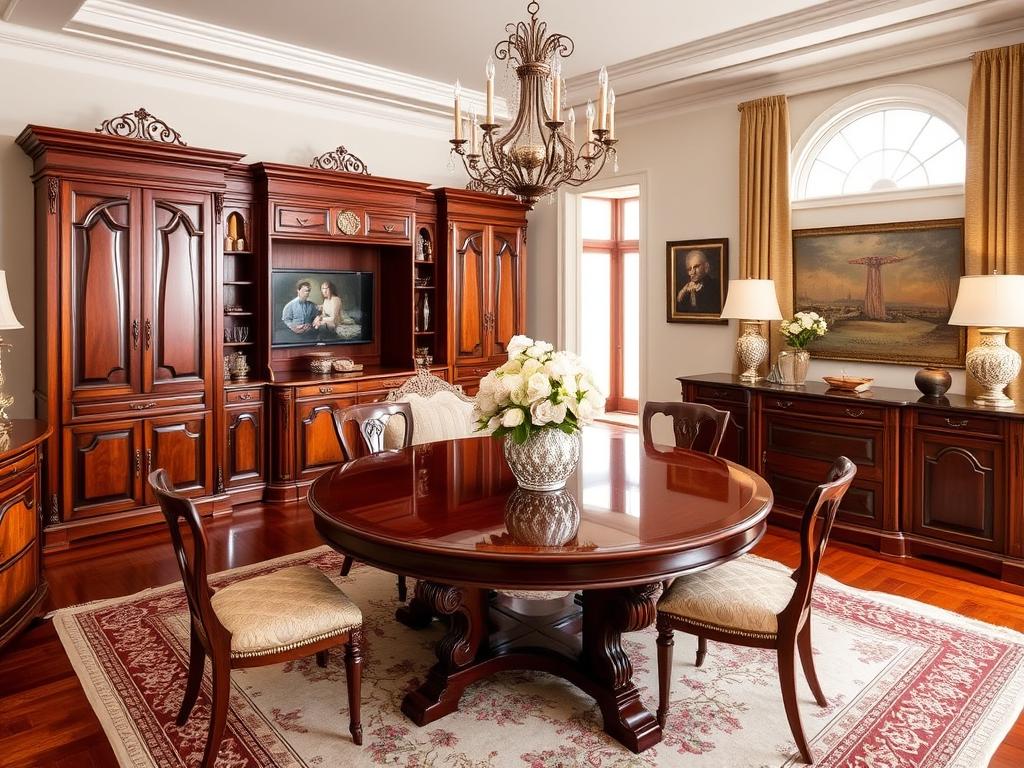
Cherry wood furniture is popular because edges profile cleanly, panels stay stable, and the finish can feel almost soft to the touch after curing—especially with oil/varnish blends that leave a warm, hand-rubbed feel. Dining tables, dressers, desks, and bed frames all benefit from cherry’s balance of strength and workability.
If you’re planning a build, cross-compare with our internal roundup of types of wood for furniture so you can see where cherry fits versus harder, more dent-resistant options. For specific project inspiration on our site, a cherry-top works well on a solid wood desk because the fine grain keeps the surface visually calm.
Cherry wood flooring
Cherry wood flooring looks fantastic and ages gracefully, but it’s a better fit for bedrooms, offices, and lower-traffic areas than busy kitchens or entryways. The practical issue isn’t that it’s “weak”—it’s that the surface can dent from heels, grit, and dropped objects, and those dents catch light in a way that makes them more visible on darker aged cherry.
A common mistake is choosing a super-flat, high-gloss finish because it looks great on day one; in real homes it shows every compression mark and scratch. If you want cherry floors anyway, pick a lower-sheen finish, use felt pads religiously, and keep grit down with a good doormat system and frequent vacuuming.
Specialty projects
Cherry excels in specialty work like turned bowls, small boxes, instrument parts, inlay backers, and carved details because it cuts cleanly and doesn’t fight you like some interlocked-grain woods. After sanding, it can feel almost “buttery” under your fingertips, especially on end grain that’s been burnished with a scraper.
If you’re stocking up for turning, choose blanks with straight grain and avoid pith and big knots; that’s where cracks like to start. For more project matching, our wood turning blanks guide helps you pick species and blank styles that reduce tearout.
Smoking and firewood
Cherry is a favorite for smoking wood because it burns with a mild, slightly sweet aroma that plays well with poultry, pork, and fish. When it’s properly dried, the smoke stays cleaner; when it’s wet, it can smolder and leave a harsher, acrid note that clings to food.
For backyard cooks who want predictable results, pre-packaged chunks are an easy way to control flavor.
If you’re using cherry as firewood, kiln-dried packs light faster and smoke less—useful in smaller stoves and firepits where airflow is limited.
Cherry wood comparisons and tradeoffs
Cherry’s tradeoff is simple: you get gorgeous color, friendly machining, and strong interior durability, but you give up dent resistance compared with harder, stiffer woods. Comparing by real use case (furniture, floors, outdoors) beats arguing a single hardness number.
Practical Notes From Real-World Use
Cherry looks forgiving until you start finishing, then the little problems show up: glue smears that vanish on bare wood will flash as pale spots under oil; blotching appears where sanding pressure varied; and “matched” boards drift apart in color after two months of window light. I’ve also seen cherry panels come out of clamps looking perfect, then reveal shallow clamp bruises as soon as the first coat hits—like fingerprints frozen into the sheen.
What fixes it in practice: scrape glue lines before sanding (don’t rely on sanding alone), keep a consistent grit plan across every part, and finish sample boards from the same milling batch with your full schedule. For dent risk on installed pieces, I’ll pre-break edges and use a slightly lower sheen so the room’s raking light doesn’t spotlight every compression mark.
- Stain going blotchy: use a light washcoat and lean on dye instead of heavy pigment.
- Color mismatch after install: pre-age samples in the same light and avoid covering new surfaces for weeks.
- Unexpected sap streaks: plan layout early and reserve sapwood for intentional accents or hidden faces.
- Burn marks from routing: keep bits sharp and increase feed rate; sand out burns before any color step.
Cherry vs oak
Oak brings higher hardness and more dent resistance, which helps for floors and high-abuse furniture. Cherry is easier to plane and shape cleanly, and it feels smoother under clear finish because the pores are finer—oak’s open pores often need grain filling if you want a glass-smooth surface.
In cabinets, oak’s bold grain can dominate a room; cherry reads calmer and warmer. If you like darker interiors, cherry can land naturally in that aesthetic over time—compare options in our dark wood types list.
Cherry vs maple
Hard maple is stiffer and harder, which helps for worktops and high-traffic floors, but it can be more finicky to sand without burnishing and can show glue/finish issues in its own way. Cherry is easier to work into crisp joinery and tends to look richer under simpler clear coats.
The biggest practical difference: maple stays light (or ambers slightly), while cherry darkens noticeably. If you need a consistent light tone for years, cherry will fight that plan unless you control light exposure and accept natural aging.
Cherry vs mahogany
Mahogany offers similar warmth with its own ribboning and chatoyance, while cherry gives you a smoother, finer-grain look. Cherry is often a bit harder than many “true mahogany” references (depending on species), but the bigger day-to-day difference is sourcing consistency and how each wood reads under clear finishes.
If you’re weighing these for furniture, read our mahogany wood guide alongside your cherry plan—mahogany tends to be more forgiving under certain stain schedules, while cherry rewards a lighter hand and better prep.
Cherry vs teak
Teak wins on outdoor durability and moisture tolerance, while cherry wins on indoor finishing clarity and domestic availability. Teak’s natural oils can complicate gluing and finishing; cherry glues easily but doesn’t belong where rain, sun, and humidity swings hit it directly.
If your project lives near water (bathroom vanity, mudroom bench), teak-style durability is the goal; cherry needs extra protection and realistic expectations. For indoor furniture away from wet zones, cherry delivers that warm “depth” without fighting your tools.
Cherry vs alder
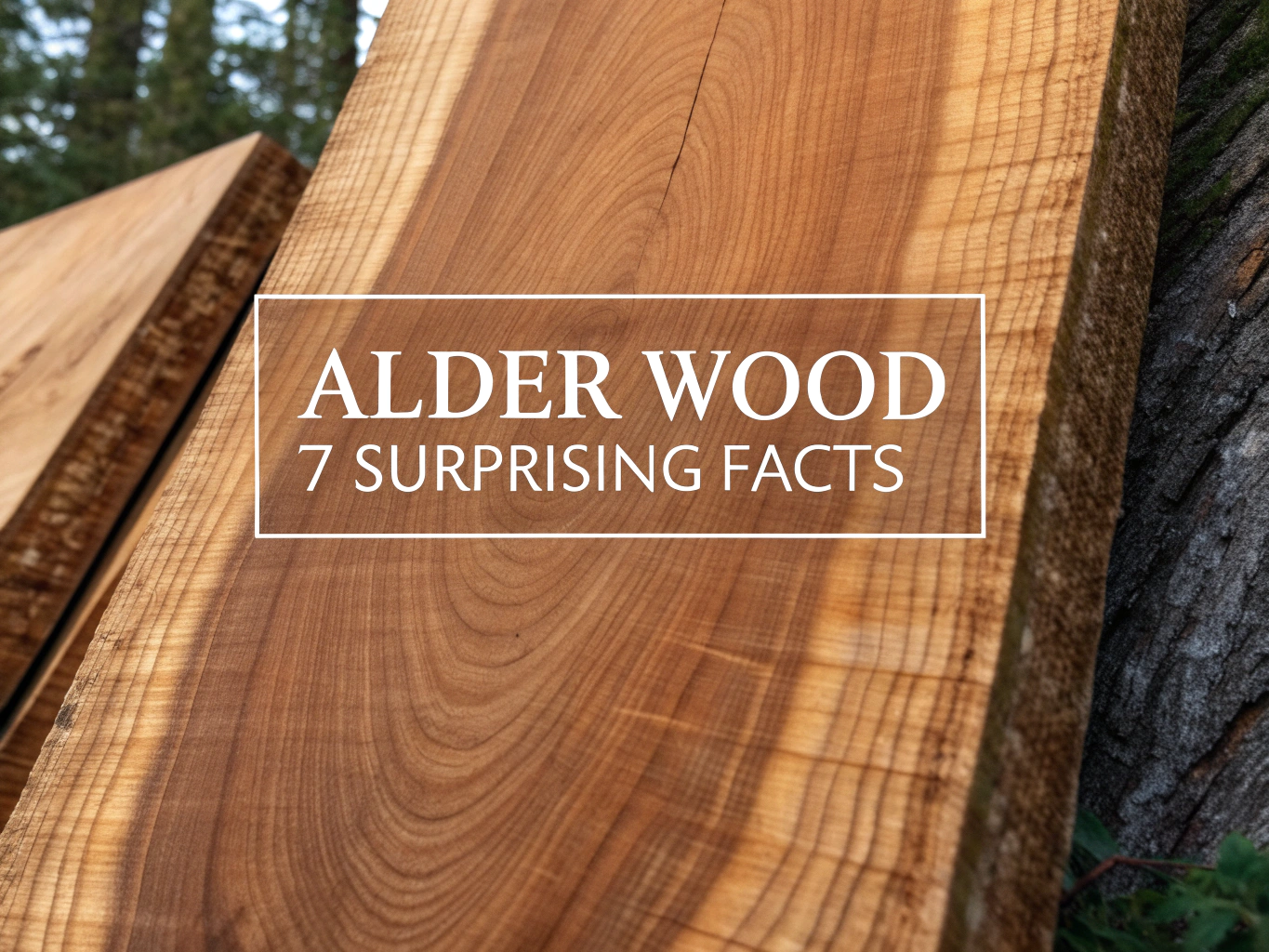
Alder is softer and often chosen as a budget-friendly cabinet wood; cherry gives better wear and a more natural, upscale look under clear finish. Alder can stain more evenly than cherry in some cases, but it dents very easily and can look tired faster on high-touch edges and door corners.
If you’re trying to hit a mid-range budget while still getting a “cherry-ish” feel, you can use cherry on show surfaces (tops, face frames) and a secondary wood elsewhere—just plan for the fact that cherry will darken and the companion wood might not.
Cost, sustainability, and buying tips
Cherry sits in a mid-to-premium domestic tier: it’s not the cheapest hardwood, but it’s often less painful than many exotics for comparable visual impact. Buying smart is mostly about grading, sapwood expectations, and ordering extra for color matching.
Price per board foot
In most retail and small-shop supply chains, cherry commonly runs around $3–$10 per board foot depending on grade, thickness (4/4 vs 8/4), width, and whether you’re buying shorts or long/wide boards. Wide, clear boards command a premium because they reduce glue lines and make door panels and table tops look cleaner.
Plan your waste: if you need color-matched panels, order extra so you can reject boards that won’t blend. That “extra” often costs less than trying to rescue a mismatched glue-up with toner and stain corrections later.
Sustainability considerations
American black cherry is often a practical sustainability choice for domestic builds because it’s commonly available and sourced through established North American forestry systems. You’ll still want to ask for reputable sourcing (FSC availability varies by supplier), and you should be wary of “mystery cherry” bundles that don’t disclose species or origin clearly.
If sustainability is the deciding factor, prioritize local or regional mills when possible and ask whether the stock is steamed (which can affect yield and appearance). You’ll get better transparency and usually better board selection than random mixed online lots.
Selecting lumber
Cherry rewards careful selection because color matching is half the finished look. Sight down the board for twist, look for checking at ends, and watch for gum pockets if you’re building show surfaces—those pockets can finish darker and look like stains that won’t sand out.
Cherry’s best look comes from board selection first and finishing second—fixing a mismatched glue-up after the fact always costs more time.
Shop-floor rule of thumb
DIY packs and strips
If you’re building small projects or testing cherry wood stain schedules, pre-cut strips and boards save milling time and reduce waste. Here are a few DIY-friendly options that work well for trim, small cabinetry parts, inlays, and practice samples:

Barrington Cherry Lumber Strips 3/4 x 2 inch
- Set of four 3/4 inch x 2 inch x 36 inch cherry strips for projects
- Furniture grade hardwood with tight grain and consistent thickness
- Smooth milled faces ready for glue up and finishing
- Ideal for trim, moulding, and small cabinetry work
- Stable, easy to stain, and matches traditional hardwood palettes
 Buy on Amazon
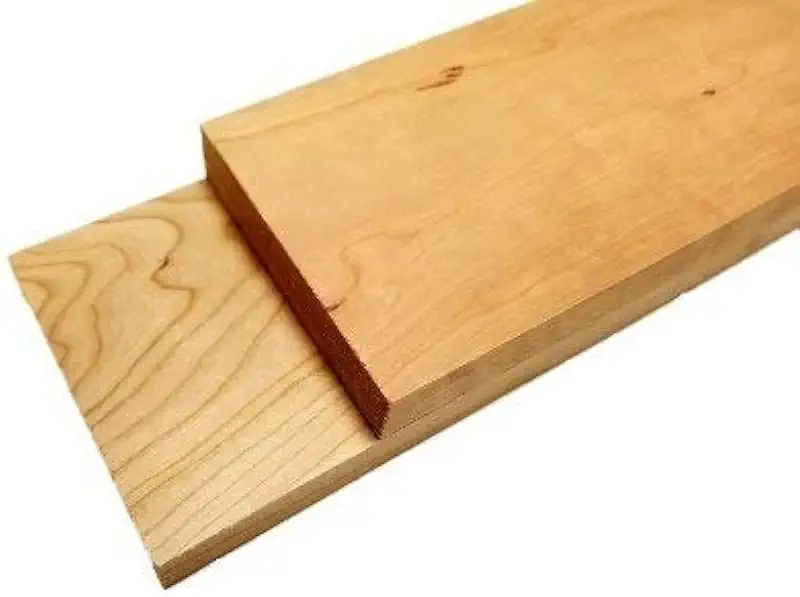
Barrington Cherry Board 3/4 x 6 inch
- Two wide boards at 3/4 inch x 6 inch x 48 inch for larger builds
- Excellent for cabinet doors, shelving, and visible woodworking
- Consistent thickness and smooth surface for professional finishes
- Holds stain and polish well to highlight cherry figure and color
- Solid hardwood strength for long lasting furniture and fixtures
Buy on Amazon

Cherry Wood Sheets 4 x 8 inch 1/8 inch
- Thin cherry wood sheets sized for signs, veneers, and inlays
- Uniform 1/8 inch thickness for easy lamination and bending
- Smooth surface ready for staining, painting, or finishing
- Easy to cut, sand, and shape for detailed craft work
- Lightweight pack ideal for hobbyists and small projects
Buy on Amazon

Exotic Wood Zone 15 Piece Variety Pack
- Includes 5 walnut, 5 maple, and 5 cherry hardboard strips for variety
- Each board sized at 3/4 inch x 2 inch x 24 inch for versatile projects
- Great starter pack for carving, turning, and small woodworking tasks
- Precut, smooth surfaces reduce prep time and sanding
- Ideal for hobbyists, inlay work, and custom small builds
Buy on Amazon
Cherry smoking wood options
For cooking, consistency matters more than looks: pick kiln-dried chunks or splits for predictable ignition and cleaner smoke. These options cover grills, smokers, and pizza ovens where small-size wood controls heat ramps and flavor:

Fire and Flavor Cherry Smoking Chunks
- All natural cherry wood with a mildly sweet smoke profile
- Large chunks deliver extended smoke time for longer cooks
- Enhances flavor of pork, poultry, and fish without overpowering
- Ideal for smokers, grills, and backyard fire cooking
- Clean burning with minimal creosote when used properly
Buy on Amazon

Old Potters Cherry Smoking Chunks 12 lb
- Approximately 12 pound bag of cherry chunks for extended use
- Ideal 2 x 3 inch chunks for steady smoke and even burn
- Adds a sweet, fruity flavor that complements many meats
- Great for grills, smokers, and open flame cooking
- Kiln dried for low moisture and easier lighting
Buy on Amazon

Kiln-Dried PA Cherry 16 inch Splits
- 16 inch kiln dried cherry splits for consistent stove and oven use
- Easy to light with low smoke and minimal sparks
- Sweet aroma that enhances grilled and smoked foods
- Sourced in the USA with reliable quality and seasoning
- Good heat output for cooking, ovens, and campfires
Buy on Amazon

Cherry Mini Pizza Oven Wood 5 inch
- Mini 5 inch pieces sized for Ooni, Gozney, and similar pizza ovens
- Kiln dried for quick firing and steady high heat
- Produces a clean, sweet smoke that complements pizza flavors
- Compact 13 pound pack designed for frequent oven use
- Product of USA with consistent density and low moisture
Buy on Amazon
FAQs
Is Cherry Wood Expensive Compared To Oak Or Maple?
Yes, cherry wood is generally more expensive than oak or maple.
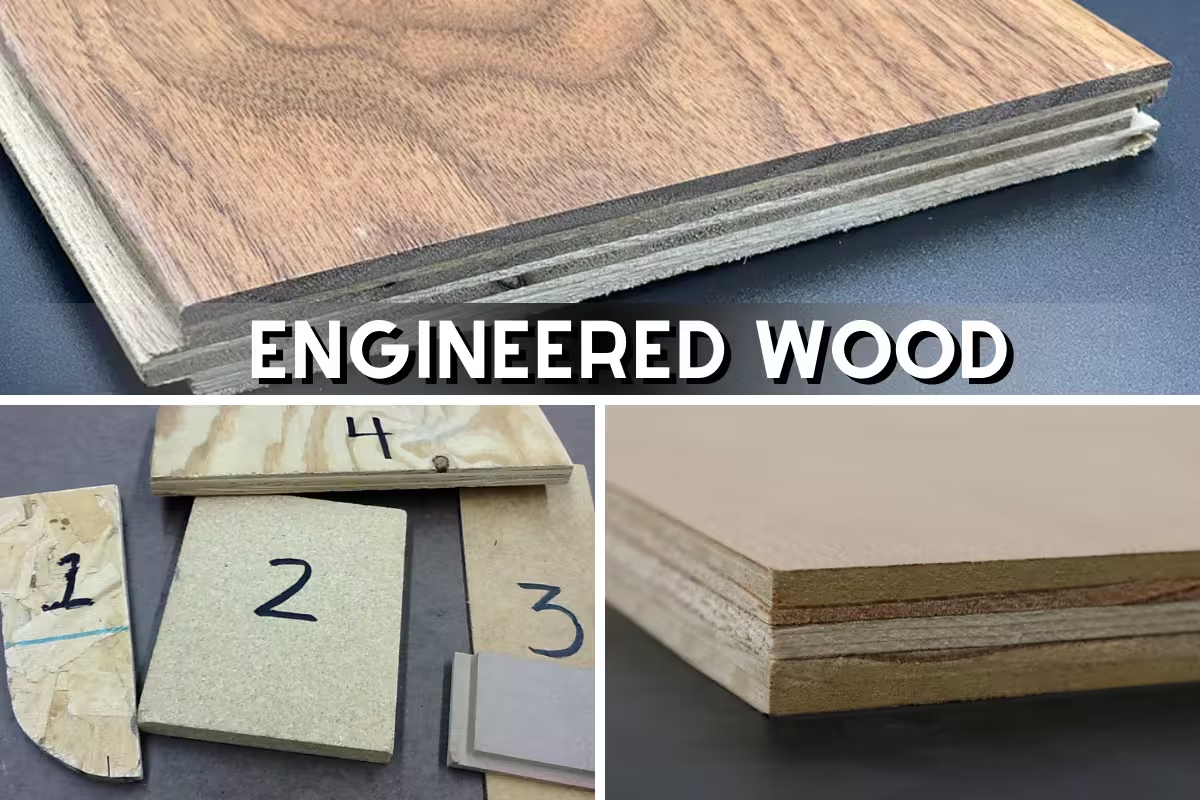
This premium comes from its warm color, smooth, attractive grain, and lower availability compared with common oaks or maples, plus demand for fine furniture and cabinetry. Prices also vary by grade, board width, thickness, and region, and engineered or lower grades can offer similar looks at lower cost.
What Is The Janka Hardness Of Cherry Wood?
The Janka hardness of American black cherry is about 950 lbf.
That places it well below red oak and hard maple, so cherry is more prone to dents and wear in heavy-use floors. Actual hardness varies by species, growth rate, and moisture content, so designers and homeowners should weigh appearance against durability and consider protective finishes or engineered products for high-traffic installations.
How Do You Stain Cherry Wood Without Blotching?
To prevent blotching, sand cherry smooth and apply a pre-stain wood conditioner or sealer before staining.
Work in thin, even coats, wipe away excess stain, and test on scrap pieces or hidden areas to dial in timing and color. For consistently even tones, consider a pigmented primer or a light toner coat after conditioning, and finish with a suitable topcoat to protect the surface.
Is Cherry Wood Flooring Good For High-Traffic Areas?
Cherry flooring can work in moderate-traffic areas but is not ideal for very high-traffic spaces because it is softer and dents more easily.
Choose harder grades or engineered cherry for better stability, apply durable finishes, and use area rugs in busy zones; regular maintenance will also prolong appearance and performance.
What Is Black Cherry Wood And How Is It Different From Cherry?
Black cherry (Prunus serotina) is the species most commonly sold as ‘cherry’ and is prized for a warm reddish-brown color and fine, straight grain.
Other cherry varieties and cultivated strains can vary in color, grain, and hardness, so always check the exact species; black cherry also darkens over time with exposure to light, which is an important consideration for matching and long-term appearance.